
Colorado Elk Hunting 2026: Complete Non-Resident Guide — Draw System, OTC Changes, Best GMUs & Costs
Colorado holds the world's largest free-ranging elk herd — over 303,000 animals. Here's your complete 2026 guide to hunting them.
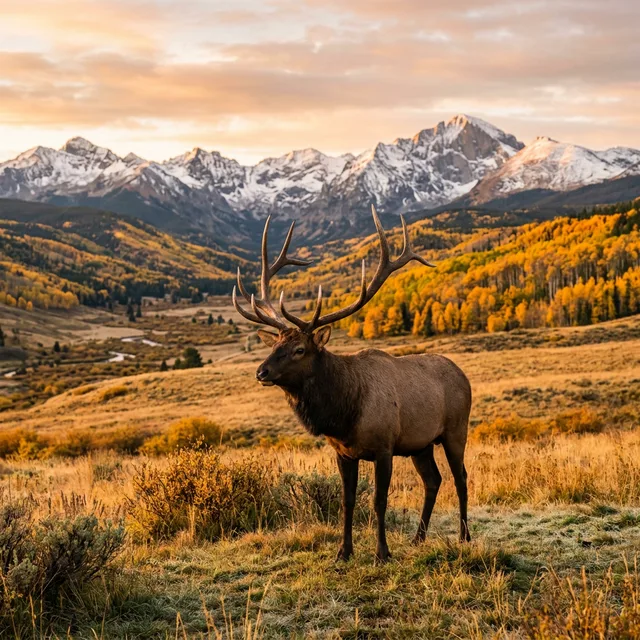
TL;DR — Key Takeaways
- Colorado has the world's largest elk herd — an estimated 303,390 animals (Oct 2024 census) across 100+ Game Management Units (GMUs).
- 2025 change now in effect: All non-resident archery elk tags are draw-only (no more OTC west of I-25). Resident OTC archery remains in designated units.
- NEW for 2026: OTC bull elk tags eliminated in Gunnison Basin GMUs 54, 55, and 551 — now limited draw only (CPW Commission approved Jan 14-15, 2026).
- Non-resident elk tag total cost: approximately $977+ (elk license ~$845 + qualifying small game ~$105 + habitat stamp ~$13 + application fee ~$11.50). Draw deadline: April 7, 2026.
- Best GMU regions: White River National Forest, Flat Tops Wilderness, Gunnison Basin (now draw-only), and San Juan Mountains.
- Physical preparation is critical — most Colorado elk hunting occurs at 8,000–11,000 feet elevation.
Why Colorado Is America's Elk Hunting Capital
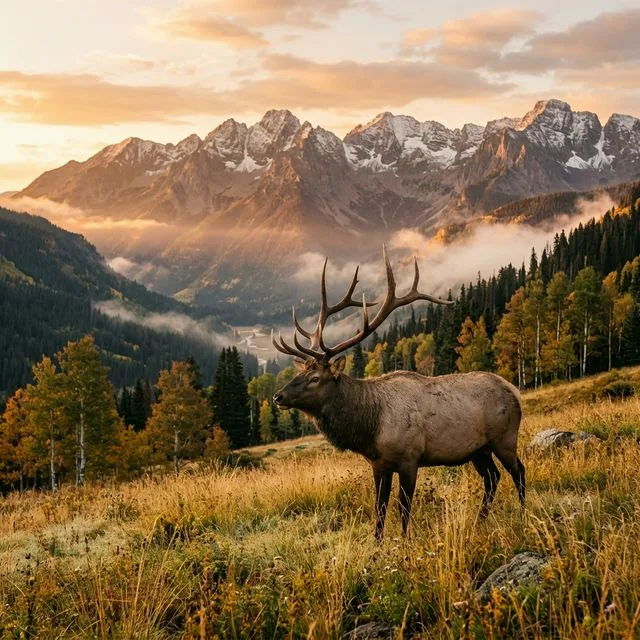
Colorado holds the distinction of being home to the world's largest free-ranging elk herd, with a statewide population estimated at approximately 303,390 animals according to the most recent CPW census (October 2024). To put that in perspective, Colorado's elk population is larger than the next two states (Montana and Oregon) combined.
This massive herd roams across 23 million acres of public land — including 11 national forests, vast BLM holdings, and dozens of state wildlife areas — giving hunters extraordinary access to prime elk habitat. From the alpine tundra above timberline in the San Juan Mountains to the oakbrush-covered mesas of the Western Slope, Colorado's diverse terrain creates a wide range of hunting experiences.
By the Numbers
| Metric | Value |
|---|---|
| Estimated Elk Population | ~303,390 (Oct 2024 census) |
| CPW Objective Range | 259,600 – 317,300 |
| Total GMUs with Elk | 100+ |
| Public Land (Acres) | 23 million+ |
| National Forests | 11 |
| Annual Elk Licenses Issued | 170,000+ |
| Average Bull Harvest | 40,000+ per year |
| 2026 Draw Deadline | April 7, 2026, 8:00 PM |
Colorado Parks and Wildlife (CPW) manages elk at the Data Analysis Unit (DAU) level — each DAU encompasses one or more GMUs and has its own population objective and herd management plan. This granular management system is why Colorado consistently produces high-quality hunting while maintaining healthy elk numbers.
Colorado's Draw System — Preference Points Explained Step by Step
Understanding Colorado's big game draw is the single most important step for any elk hunter, especially non-residents. The system determines who gets limited tags and when.
How the Draw Works
Colorado uses a preference point system for most big game species. Here's the flow:
Application Timeline
| Step | Timing | Details |
|---|---|---|
| Qualifying license purchase | January – April | Non-residents must buy a small game license ( |
| Application window | Early February – April 7, 2026 | Submit online at CPW's website; ~$11.49 non-refundable application fee per species |
| Draw results | Early June | Results posted on CPW account; credit card charged if drawn |
| Leftover license sales | Mid-July | Unclaimed tags available first-come, first-served online |
| Preference point purchase deadline | April 7, 2026 | Buy a point without applying for a tag (~$40.49 non-resident) |
Preference Points vs Weighted Points
This distinction confuses many hunters:
Preference points (elk, deer, antelope): Hunters with the most points draw first. If you have 5 points and the cutoff is 4, you will draw. This is a straightforward queue system. A small percentage of licenses (typically 20%) are reserved for a random draw to give newer applicants a chance.
Weighted points (moose, sheep, goat, bear): Each point adds your name to the hat one additional time, but it's still fundamentally a lottery. Having 10 weighted points means 10 entries, but a hunter with 1 point could still draw ahead of you.
How Many Points Do You Need?
Point requirements vary dramatically by species, unit, and season:
| Species | Trophy Units (NR) | Mid-Range Units | Easy-Draw Units |
|---|---|---|---|
| Elk (Bull) | 8–20+ points | 3–7 points | 0–2 points |
| Elk (Cow/Antlerless) | 0–3 points | 0–1 points | 0 points |
| Deer | 5–15+ points | 2–5 points | 0–2 points |
| Antelope | 3–8 points | 1–3 points | 0–1 points |
| Moose | Lifetime (weighted) | Lifetime | 5–15 years |
| Bear | 0–3 points | 0–1 points | OTC available |
2025 OTC Changes — What Non-Residents Must Know
The 2025 Big Game Season Structure (BGSS) introduced the most significant elk tag rule change in a decade:
Non-Resident Archery Elk: Now Draw-Only
Starting in 2025, all non-resident archery elk licenses for units west of I-25 and GMU 140 are draw-only. This eliminates the OTC purchase that non-residents relied on for decades.
Why CPW made the change:
- Non-resident OTC archery tag purchases had actually surpassed resident purchases
- Severe crowding during September archery season in popular units
- Desire to maintain OTC archery as a resident benefit
What this means for non-residents:
- You must apply in the spring draw for archery elk tags
- Many previously-OTC archery tags went to leftover sales in the first year (2025), indicating reasonable availability
- Some GMUs east of I-25 still offer NR OTC archery elk (specific hunt codes only)
Remaining OTC Options (2025)
| Tag Type | Availability |
|---|---|
| Resident Archery Elk | OTC in designated units (west of I-25) |
| NR 2nd/3rd Season Rifle Bull Elk | OTC in many units (changing 2026 — see below) |
| Bear (Rifle) | OTC statewide |
| Archery Pronghorn | OTC statewide |
| White-tailed Deer | OTC in select plains units |
2026 Update: Gunnison Basin OTC Officially Eliminated
The Colorado Parks and Wildlife Commission approved on January 14-15, 2026 the elimination of OTC bull elk tags for the second and third rifle seasons in GMUs 54, 55, and 551 (Gunnison Basin), effective with the 2026 hunting season. This brings the northern Gunnison Basin in line with the southern units (GMUs 66 and 67), which transitioned to limited licenses back in 1999 — meaning the entire Gunnison Basin now operates under limited elk licenses for all hunt codes.
Why CPW made this change:
- Excessive hunter crowding during 2nd and 3rd rifle seasons
- High bull kill rates threatening herd quality
- Trespassing concerns from concentrated hunter pressure
- Need for more precise herd management tools
What to expect for tag numbers: CPW staff have proposed that initial bull license numbers for 2nd and 3rd rifle seasons will be set near the previous three-year average of OTC license usage, or reduced by no more than 10%. Final license numbers will be approved at CPW's May 2026 Commission meeting.
Action for hunters: If you've been hunting Gunnison Basin OTC, you must now apply through the draw by the April 7, 2026 deadline. Given the transition year, drawing odds may be favorable as many traditional OTC hunters may not apply.
Elk Tag Cost Breakdown — What Every Dollar Pays For
Colorado elk hunting as a non-resident represents a significant financial commitment. Here's a transparent breakdown of every fee, so you know exactly where your money goes:
The True Cost of a Non-Resident Elk Tag
| Fee Component | Cost | What It Funds |
|---|---|---|
| Elk License | ~$803–$845 | Includes annual fishing license; funds CPW operations and wildlife management |
| Qualifying Small Game License | ~$104.86 | Required to enter the draw; covers small game hunting privileges |
| Habitat Stamp | ~$12.76 | Required for ages 18–64; funds habitat conservation projects statewide |
| Application Fee | ~$11.49 | Non-refundable processing fee per species application |
| Search & Rescue Fee | ~$1.25 | Included in license; funds backcountry search and rescue operations |
| Wildlife Education Fee | ~$1.50 | Included in license; funds hunter education programs |
| TOTAL | ~$935–$977+ |
Note: All NR big-game licenses are combination licenses that include annual fishing privileges valid through March 31 of the following year.
Where Your Elk Tag Money Actually Goes
Unlike many states that funnel license revenue into general funds, CPW is entirely self-funded through license sales, park fees, and federal excise taxes (Pittman-Robertson Act). Your ~$977 directly supports:
- Habitat restoration — Prescribed burns, water development, and fencing projects across millions of acres
- Population monitoring — Aerial surveys, GPS collaring studies, and DAU herd management plans
- Access programs — Maintaining public land access, trail maintenance, and SWA improvements
- Law enforcement — Wildlife officers patrolling 23 million acres of public land
- Disease management — CWD testing, brucellosis monitoring, and herd health programs
Building Points Without Hunting
If you're investing years of preference points before your dream hunt:
| Item | Annual Cost |
|---|---|
| Preference Point Purchase | ~$40.49 |
| Qualifying Small Game License | ~$104.86 |
| Habitat Stamp | ~$12.76 |
| TOTAL per year | ~$158 |
Over a 5-year point-building strategy, you'll invest approximately $790 in points alone — before the ~$977 tag cost in the year you actually hunt.
How to Elk Hunt Colorado on a Non-Resident Budget
A Colorado elk hunt doesn't have to cost $10,000. Here's how experienced DIY hunters keep costs manageable:
The Budget-Conscious Strategy
| Category | Budget Approach | Cost |
|---|---|---|
| Elk license & fees | Apply for draw (no shortcuts here) | ~$977 |
| Travel | Drive instead of fly; carpool with hunting partner | $300–$600 |
| Lodging | Dispersed camping on National Forest/BLM (free) | $0 |
| Food | Pack cooler from home; cook at camp | $100–$200 |
| Meat processing | DIY field processing with quality game bags | $30–$50 |
| Meat transport | Drive-home with quality coolers and ice | $30–$60 |
| TOTAL | $1,437–$1,887 |
5 Money-Saving Tips for Non-Resident Elk Hunters
- Target leftover tags (mid-July) — Many quality units have unclaimed tags after the primary draw, available first-come, first-served with no preference points needed
- Hunt 4th rifle season — Fewer hunters, elk concentrated on winter range, and some units with easier draw odds
- Skip the outfitter on your first trip — Use free e-scouting tools (onX, Google Earth, CPW GMU maps) and arrive 3 days early to scout. Save the $5,000–$8,000 guided hunt for a trophy-unit tag
- Process your own meat — Professional processing runs $200–$400. Quality game bags ($40) + a good knife set ($50) pay for themselves on the first animal
- Apply through the hunting license calculator — Compare total costs across states before committing. Idaho OTC elk tags (~$492) are significantly cheaper, though Colorado's herd size and public land access are unmatched
For more budget strategies, see our guide on how to hunt out of state on a budget.
Season Dates — Archery, Muzzleloader & Rifle (2025–2029 BGSS)
Colorado's BGSS establishes consistent season dates across a 5-year period (2025–2029):
| Season | 2025 Dates | Method | Notes |
|---|---|---|---|
| Archery | Sep 2 – Sep 30 | Bow/Crossbow | Separate from rifle units |
| Muzzleloader | Sep 13 – Sep 21 | Muzzleloader only | Overlaps with archery |
| 1st Rifle | Oct 15 – Oct 19 | Rifle/legal firearm | 5 days, limited units |
| 2nd Rifle | Oct 25 – Nov 2 | Rifle/legal firearm | 9 days, most popular |
| 3rd Rifle | Nov 8 – Nov 16 | Rifle/legal firearm | 9 days, elk moving to winter range |
| 4th Rifle | Nov 19 – Nov 23 | Rifle/legal firearm | 5 days, fewer hunters |
Which Season Should You Choose?
Archery (September): The rut peaks in mid-to-late September, making this the most exciting season. Bugling bulls, close encounters, and warm weather. Downside: limited tags for non-residents starting 2025.
Muzzleloader (September): Overlaps with archery and the rut. Challenging with primitive weapons but rewarding. Draw-only.
2nd Rifle (Late October): The most popular season. Elk are beginning post-rut migration to lower elevations. Snow can push elk into the open. Best overall success rates.
3rd Rifle (November): Elk are actively migrating. Heavy snowfall years produce excellent hunting as elk move through traditional corridors. Temperatures can drop below 0°F.
4th Rifle (Late November): Short season with fewer hunters. Elk are on or near winter range. Can be extremely productive if you know the winter concentration areas.
Best GMUs for Elk — Regional Analysis
White River / Flat Tops — Trophy Territory
The White River National Forest (2.3 million acres) and adjacent Flat Tops Wilderness area are home to some of Colorado's largest elk herds and produce trophy-quality bulls consistently.
Key GMUs: 23, 24, 25, 26, 33, 34, 42, 43, 44, 47, 231, 241, 444, 471
- Why hunt here: Highest elk density in the state, trophy management units with mature bull populations and 45:100 bull/cow ratios
- Draw difficulty: Very high — trophy units like GMU 1, 2, 10, and 201 require 8–20+ preference points for non-residents
- Terrain: Alpine meadows, dark timber, aspen groves, and oakbrush. Elevations range from 7,000 to 12,000+ feet
- Public land: Extensive USFS land; some BLM parcels
- Access: Towns of Meeker, Craig, and Rifle serve as base camps
- Success tip: Hunt the transitions between dark timber and alpine meadows during the early morning
Gunnison Basin — Accessible Elk Country
The Gunnison Basin offers over 2 million acres of public land and has historically been one of the most accessible elk hunting areas for non-residents thanks to OTC tags.
Key GMUs: 54, 55, 551, 67
- Why hunt here: Huge area with extensive public access, good elk numbers, and historically easy tag availability
- Draw difficulty: Currently OTC for 2nd/3rd rifle bull elk (transitioning to draw in 2026)
- Terrain: High-altitude sagebrush parks, spruce-fir forests, and aspen at 8,000–11,500 feet
- Public land: Gunnison National Forest, BLM, Curecanti National Recreation Area
- Access: Gunnison and Crested Butte as base camps; many trailheads accessible from Highway 50
- Caution: This area sees extremely high hunter density during 2nd and 3rd rifle seasons — consider 4th rifle or archery for a quieter experience
San Juan Mountains — Backcountry Paradise
The San Juan Mountains in southwestern Colorado offer some of the most rugged and remote elk hunting in the state.
Key GMUs: 74, 75, 76, 77, 78, 80, 681, 741
- Why hunt here: Wild, remote country with excellent herd numbers and lower overall hunter pressure than the Gunnison or White River areas
- Terrain: The most vertical terrain in Colorado — dramatic peaks, deep canyons, dense spruce-fir forests. The Weminuche Wilderness (499,000 acres) is the state's largest wilderness area
- Best for: Experienced backcountry hunters willing to pack in on foot or horseback
- Draw difficulty: Moderate — some units drawable with 2–5 preference points for non-residents
- Access: Durango, Pagosa Springs, and Silverton serve as staging areas
- Success tip: Plan for multi-day pack-in trips; elk in the San Juans live high and can be difficult to reach
Holy Cross / Eagle Valley — Central Colorado
A good mid-range option offering quality elk hunting with moderate draw difficulty.
Key GMUs: 35, 36, 45, 361
- Terrain: Mix of national forest and private ranch margins along the Eagle River valley
- Proximity: Near Vail, Minturn, and Eagle — convenient logistics
- Draw difficulty: Moderate — often drawable with 3–6 preference points
Non-Resident Elk Hunting — Realistic Cost Breakdown
Elk hunting in Colorado as a non-resident is a significant financial commitment. Here's every dollar itemized:
Mandatory Costs
| Item | Cost | Notes |
|---|---|---|
| Non-Resident Elk License | $845.16 | Includes an annual fishing license |
| Qualifying Small Game License | $104.86 | Required to enter the draw |
| Habitat Stamp | $12.76 | Required for all hunters 18–64 |
| Application Fee | $11.49 | Non-refundable, per species |
| Search & Rescue Fee | $1.25 | Included in license |
| Wildlife Education Fee | $1.50 | Included in license |
| TOTAL (Tag Only) | ~$977 |
If Building Points Without Hunting
| Item | Cost |
|---|---|
| Preference Point Purchase | $40.49 |
| Qualifying Small Game License | $104.86 |
| Habitat Stamp | $12.76 |
| TOTAL (PP Year) | ~$158/year |
Total Trip Budget (Realistic)
| Category | DIY Public Land | Guided Outfitter |
|---|---|---|
| Elk license & fees | $977 | $977 |
| Guided hunt fee | — | $5,000–$8,000 |
| Travel (flight + rental truck) | $600–$1,200 | $400–$800 |
| Lodging (7–10 days) | $500–$1,500 | Included |
| Food & supplies | $200–$400 | Included |
| Meat processing | $200–$400 | $200–$400 |
| Meat shipping | $150–$300 | $150–$300 |
| TOTAL | $2,600–$4,800 | $6,700–$10,500 |
Public Land Elk Hunting — National Forest, BLM & Wilderness
Over one-third of Colorado is public land, making it one of the best states in the nation for DIY elk hunting. Key public land categories:
National Forests (USFS)
Colorado's 11 national forests contain the backbone of elk habitat:
| National Forest | Acres | Key Elk GMUs |
|---|---|---|
| White River | 2,300,000 | 23, 24, 25, 26, 33, 34, 42, 43, 44 |
| Gunnison | 1,672,000 | 54, 55, 551, 67 |
| San Juan | 1,878,000 | 74, 75, 76, 77, 78 |
| Rio Grande | 1,860,000 | 76, 80, 82, 86 |
| Routt | 1,125,000 | 14, 15, 16, 161, 171 |
| Grand Mesa / Uncompahgre | 3,161,000 | 40, 41, 42, 43, 521 |
BLM Land
The Bureau of Land Management manages over 8 million acres in Colorado. BLM land is generally open to hunting unless specifically posted as closed. Key BLM areas for elk:
- Northwest Colorado — Vast BLM holdings between Meeker and Craig
- Gunnison/Upper Arkansas — BLM parcels interspersed with national forest
- Western Slope — Oakbrush BLM tracts that elk use as transitional habitat
Wilderness Areas
Colorado's designated wilderness areas offer exceptional elk hunting for those willing to go deep:
- Flat Tops Wilderness (235,214 acres) — GMU 24. One of the state's largest elk herds. Can be accessed from Meeker, Yampa, or Glenwood Springs
- Weminuche Wilderness (499,771 acres) — The largest wilderness in Colorado. Accessed from Durango, Creede, or Silverton
- Maroon Bells-Snowmass Wilderness (181,535 acres) — Stunning terrain with good elk numbers
- Holy Cross Wilderness (122,797 acres) — Accessible from Minturn and Red Cliff
Wilderness rules: No motorized access, no mountain bikes. Pack in on foot or horseback. Game must be quartered and packed out.
Guided vs DIY Elk Hunts — Cost & Success Comparison
| Factor | DIY Public Land | Guided Outfitter |
|---|---|---|
| Total Cost | $2,600–$4,800 | $6,700–$10,500 |
| Bull Success Rate | 10–18% | 40–70%+ |
| Physical Demand | Extreme | Moderate–High |
| Scouting Required | Extensive (maps, e-scouting, pre-trip) | Outfitter handles |
| Meat Packing | You + frame pack | Horses/mules |
| Lodging | Tent, truck bed, dispersed camp | Wall tent/cabin |
| Best For | Experienced hunters, budget-conscious | First-timers, trophy-focused |
When to Go Guided
Consider a guided elk hunt if:
- It's your first Colorado elk hunt and you want to maximize your chance of success
- You're physically unprepared for 5–10 miles of daily hiking at 9,000+ feet
- You drew a premium unit tag and want to make the most of a once-in-a-decade opportunity
- You don't own stock (horses/mules) and plan to hunt wilderness areas
DIY Essentials
For a successful DIY elk hunt:
- E-scout extensively using onX Maps, Google Earth, and CPW's GMU maps before your trip
- Arrive 2–3 days early for altitude acclimation and in-person scouting
- Have a meat plan — know the nearest processor and have coolers/game bags ready
- Physical fitness — train for 3–6 months before your hunt with weighted pack hikes and elevation training
Physical Preparation — Altitude & Fitness for Colorado Elk
This section can't be overstated: altitude is the #1 factor that derails out-of-state elk hunts. Most Colorado elk hunting occurs between 8,000 and 11,000 feet — altitudes where flatlanders experience 20–30% reduced oxygen availability.
Altitude Acclimation Strategy
| Arrival Timeline | What to Expect |
|---|---|
| Day 1 | Headache, shortness of breath, fatigue on moderate exertion |
| Day 2-3 | Symptoms begin to improve; still tire quickly on steep terrain |
| Day 4-5 | Significant improvement; most hunters feel functional |
| Day 7+ | Near-full acclimation for moderate elevations |
Key tips:
- Arrive at least 2 days before opening day and spend that time at elevation (not in Denver at 5,280 feet)
- Hydrate aggressively — drink 1 gallon of water per day minimum
- Avoid alcohol for the first 3 days — it worsens altitude sickness
- Eat carbohydrates — your body burns carbs more efficiently at altitude than fats
- Recognize altitude sickness — severe headache, nausea, and disorientation mean you need to descend
Fitness Training Plan
Start training at least 12 weeks before your hunt:
- Cardiovascular base (Weeks 1–4): Hiking, running, or cycling 3–4 days/week. Build to 5+ miles per session.
- Weighted pack training (Weeks 5–8): Hike with a 40–50 lb pack 2–3 times/week. Focus on steep terrain.
- Stair/elevation training (Weeks 9–12): StairMaster or stadium stairs with weight. Simulate 1,000+ ft elevation gain per session.
- Shooting fitness: Practice shooting from field positions (kneeling, sitting, prone) while breathing hard — simulate the shot you'll take after climbing.
Meat Processing at Altitude — Cooling Challenges & Local Processors
Colorado's high-altitude environment presents unique meat care challenges:
Field Care
- Temperature swings: September archery hunts can see daytime highs of 70°F+ and overnight lows below 30°F. Quarter your animal and hang quarters in shade immediately.
- Game bags are essential: Flies and yellowjackets are aggressive through October. Quality game bags (Alaska Game Bags or Caribou Gear) prevent spoilage.
- Ice availability: In remote camps, bring frozen water jugs in your cooler. Many mountain towns have limited ice supply during hunting season.
Key Meat Processors by Region
- Meeker/Craig area: Multiple processors serving the White River units
- Gunnison: Several custom processors handle high volume during rifle seasons
- Durango/Pagosa Springs: San Juan Mountain area processors
- Eagle/Vail: Fewer options; plan ahead and make reservations
Shipping meat home: Many processors offer vacuum-seal and ship services. Budget $150–$300 for a full elk shipped via FedEx or UPS Ground in insulated boxes.
Colorado Elk Hunting FAQ
See the FAQ section below for the 8 most common questions about Colorado elk hunting.
Recommended Resources
Affiliate links — we may earn a commission at no extra cost to you. Learn more
Frequently Asked Questions
Can non-residents still get OTC elk tags in Colorado?
Options have narrowed significantly. As of 2025, non-resident OTC archery elk west of I-25 is eliminated (now draw-only). Starting in 2026, Gunnison Basin GMUs 54, 55, and 551 have also transitioned to draw for 2nd/3rd rifle bull elk (CPW Commission approved Jan 2026). Non-residents can still get OTC rifle bull elk tags in many other units, and some eastern plains units offer NR OTC archery elk.
How much does it cost for a non-resident to elk hunt in Colorado?
The elk tag alone costs approximately $935–$977 (elk license ~$803–$845 + qualifying small game license ~$105 + habitat stamp ~$13 + application fee ~$11.50). A budget-conscious DIY trip totals $1,437–$1,887. A standard DIY trip runs $2,600–$4,800. Guided hunts range from $6,700 to $10,500+. Draw application deadline for 2026 is April 7.
What is the difference between preference points and weighted points?
Preference points (used for elk, deer, antelope) work like a queue — hunters with the most points draw first. Weighted points (used for moose, sheep, goat, bear) work like a lottery — each point adds one entry to the draw, but someone with fewer points can still draw ahead of you.
What is the best rifle season for elk in Colorado?
The 2nd rifle season (late October, 9 days) is the most popular and often most productive due to elk moving between summer and winter range. The 3rd rifle season (November) can be excellent in heavy snow years when elk are pushed to lower elevations. The 4th rifle season has fewer hunters but requires knowledge of winter range areas.
Do I need a habitat stamp for elk hunting in Colorado?
Yes. The Habitat Stamp ($12.76 for non-residents) is required for all hunters ages 18–64 when purchasing their first hunting or fishing license of the year. It is valid from March 1 through March 31 of the following year.
What is the best GMU for first-time elk hunters?
For first-timers, the Gunnison Basin (GMUs 54, 55, 551) offers outstanding public land access and good elk numbers. Note: OTC tags are no longer available starting 2026 — you must apply through the draw by April 7. Given the transition year, drawing odds may be favorable. The area around Gunnison and Crested Butte has excellent infrastructure including lodging, processors, and outfitter services.
How physically fit do I need to be for Colorado elk hunting?
Very fit. Most hunting occurs at 8,000–11,000 feet where oxygen levels are 20–30% lower than sea level. You should be able to hike 5–8 miles per day with a 40-lb pack on steep terrain. Start training at least 12 weeks before your hunt with progressive hiking and stair climbing with a weighted pack.
Can I hunt elk during the rut in Colorado?
Yes. The elk rut peaks in mid-to-late September, which coincides with Colorado's archery season (September 2–30) and muzzleloader season (September 13–21). Hunting bugling bulls during the rut is one of the most exciting experiences in elk hunting. Non-residents will need to apply in the spring draw for archery tags starting in 2025.