
Hunting License Reciprocity Between States — The Complete 2026 Guide
Everything you need to know about using your hunting credentials in another state.
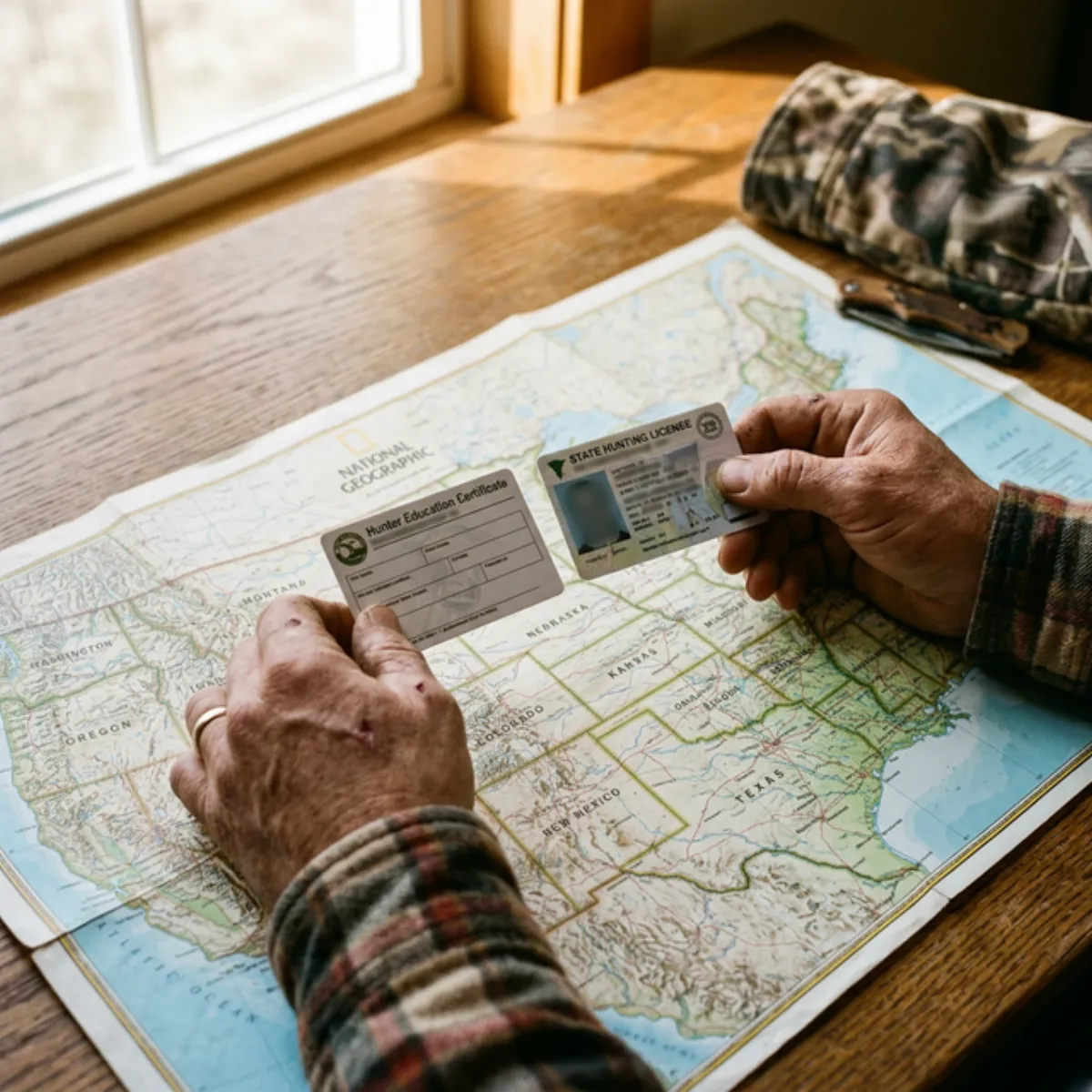
TL;DR — Key Takeaways
- All 50 states recognize IHEA-approved hunter education certificates from other US states.
- Hunting license reciprocity and hunter education reciprocity are two different things — you still need to buy a non-resident license in the host state.
- California, Connecticut, Massachusetts, and New Jersey have additional requirements even with valid out-of-state certificates.
- Most IHEA-approved online courses are recognized nationwide, but some states require an in-person field day component.
- Active-duty military personnel stationed out of state often qualify for resident license rates.
- Always verify your specific certificate's acceptance with the host state's wildlife agency before traveling.
Understanding Hunting License Reciprocity
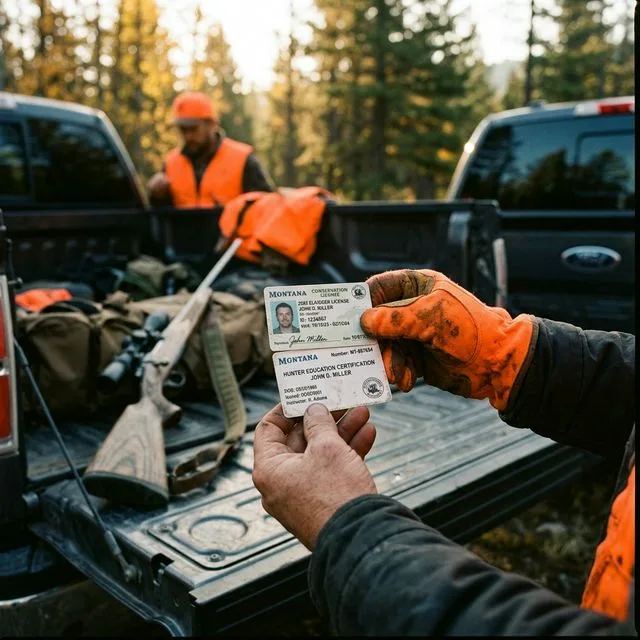
Hunting license reciprocity refers to agreements between states that allow hunters to use credentials earned in one state when hunting in another. This concept actually has two distinct components that hunters often confuse:
- Hunter education reciprocity — Whether a state accepts your hunter education certificate from another state
- Hunting license reciprocity — Whether a state offers any special licensing arrangements for out-of-state hunters
In practice, nearly every state in the US offers full hunter education reciprocity through the International Hunter Education Association (IHEA-USA). However, no state allows you to hunt with another state's hunting license — you must always purchase a non-resident hunting license in the state where you plan to hunt.
How the IHEA System Works
The International Hunter Education Association (IHEA-USA) is the governing body that sets standards for hunter education across all 50 states, Canadian provinces, and several international jurisdictions. Here's how their reciprocity framework functions:
The IHEA Certification Standard
Every state wildlife agency in the US is a member of the IHEA-USA. When a state's hunter education program meets IHEA performance standards, certificates issued by that program are automatically eligible for reciprocity in all other member jurisdictions. The IHEA standards require courses to cover:
- Firearm safety and handling (minimum competency standards)
- Wildlife conservation principles
- Hunting laws and ethics
- Survival and first aid basics
- Practical field exercises (varies by state)
The Certificate Verification Process
When you purchase a hunting license in a new state, verification typically works through one of these methods:
- Certificate number lookup — Many states can verify your certificate electronically through a shared database
- Physical card presentation — Some vendors and field officers require your original certificate card
- State verification letter — If electronic verification fails, your home state can issue a verification letter
- IHEA online lookup — The IHEA maintains a nationwide database at ihea-usa.org
State-by-State Reciprocity Reference
States With Full, Unconditional Reciprocity
The vast majority of states — approximately 44 out of 50 — offer full, unconditional reciprocity for IHEA-approved hunter education certificates. These states accept your certificate with no additional steps beyond providing your certificate number. Major hunting destinations in this category include:
- Texas — Accepts all US and Canadian certificates. Texas is one of the most welcoming states for non-resident hunters, requiring only your certificate number at license purchase.
- Colorado — Full reciprocity with all IHEA member states. Non-resident hunters simply provide their certificate when purchasing a license online or in person.
- Montana — Accepts all IHEA-approved certificates from any US state or Canadian province.
- Pennsylvania — Honors all US state certificates without additional requirements.
- Michigan — Full reciprocity plus recognition of Canadian provincial certificates.
- Wisconsin — Accepts all IHEA-approved certificates from every US jurisdiction.
- Georgia — Full reciprocity; no additional orientation or testing required.
- Alabama — Accepts all valid US hunter education certificates.
- Idaho — Recognizes all IHEA-approved programs nationwide.
- Oregon — Full reciprocity, including recognition of apprentice hunting programs from some states.
States With Additional Requirements
A small number of states accept out-of-state certificates but impose extra requirements. Understanding these before you travel is critical:
California
California accepts all IHEA-approved certificates from other states. However, the state has specific nuances:
- First-time California hunters (those who have never held a CA hunting license and haven't held an out-of-state license in the past two years) must complete hunter education before purchasing a license.
- If you completed an online course in another state, California may require you to attend a 4-hour in-person follow-up session with a certified instructor, especially if your original course lacked a hands-on field day component.
- California's own hunter education program has a mandatory field day, so they scrutinize online-only certificates more carefully.
Tip: If you plan to hunt in California, bring both your original certificate and proof of any field day completion.
New Jersey
New Jersey recognizes IHEA-certified hunter education from other states, but the process is slightly more involved:
- You must present proof of certification when applying for a New Jersey hunting license.
- Non-residents are encouraged to complete hunter education in their home state before applying.
- Hunter education is mandatory for anyone who has never held a hunting license in New Jersey — there is no grandfather clause.
- While NJ accepts out-of-state certificates, the verification process may take longer for older certificates issued before electronic databases became standard. Having your original card expedites the process.
Connecticut
Connecticut is one of the stricter states regarding reciprocity:
- Out-of-state IHEA-approved certificates are accepted for non-resident licenses.
- However, Connecticut does not accept online-only hunter education certificates. If your certificate was earned through an online-only course without an in-person field day component, it will be rejected.
- Residents who completed an out-of-state online course must still attend Connecticut's 8-hour in-person field day to be eligible for a resident license.
- All out-of-state certifications are verified against IHEA records before a license can be issued.
- First-time hunters or those who haven't held a hunting license in five years must present proof of education.
Massachusetts
Massachusetts accepts IHEA-approved certificates from other states with these considerations:
- First-time adult hunters (age 18+) must have completed a Basic Hunter Education course, unless they held a valid license before January 1, 2007.
- Hunters must carry proof of their certification when hunting in Massachusetts — digital copies are accepted in most situations, but a physical card is recommended.
- Massachusetts verification requirements are straightforward, but the state does confirm certificate validity with the IHEA database.
Hawaii
Hawaii has the most restrictive reciprocity policy:
- All hunters must complete a Hawaii-approved hunter education course, regardless of certifications from other states. Exceptions are extremely limited.
- This policy reflects Hawaii's unique wildlife management needs and limited hunting opportunities compared to mainland states.
How Online Courses Count Toward Reciprocity
Online hunter education has grown rapidly, with providers like Hunter-Ed.com now approved in 48+ states. Understanding how online courses interact with reciprocity rules is essential for traveling hunters.
Fully Accepted Online Courses
Online courses approved by both the IHEA and the issuing state are generally accepted everywhere. The most widely recognized online providers include:
- Hunter-Ed.com — Approved in 48+ states, the most broadly accepted online platform
- State-run online courses — Each state offers its own approved online option through their wildlife agency
- HunterCourse.com — Approved in multiple states
The Field Day Question
The key variable for online course reciprocity is whether your course includes an in-person field day:
- Online + field day — These certificates are accepted virtually everywhere, including strict states like Connecticut
- Online-only (no field day) — These certificates may face scrutiny or rejection in states that require hands-on training, specifically Connecticut, California (for some license types), and Hawaii
Best Practice for Online Course Students
If you completed an online-only course and know you'll hunt across state lines, consider:
- Completing a voluntary field day through your home state's wildlife agency
- Adding an advanced certification (bowhunter ed, turkey hunting safety) to strengthen your credentials
- Contacting the host state's agency in advance to verify your specific certificate's acceptance
Military Personnel Reciprocity Exceptions
Active-duty military members and their families enjoy special reciprocity benefits in many states. These provisions recognize the unique challenges of frequent relocations.
Resident License Rates for Active Duty
Many states allow active-duty military stationed within their borders to purchase licenses at resident rates, even if the service member has not established legal residency. States offering this benefit include:
- Texas — Active-duty personnel stationed in Texas can buy resident licenses
- Colorado — Military stationed in CO qualify for resident rates
- Virginia — Active-duty military with Virginia-based orders get resident pricing
- Florida — Service members stationed in Florida qualify for resident rates
- Georgia — Military personnel on active duty in Georgia receive resident pricing
- North Carolina — Active-duty stationed in NC get resident license rates
- Tennessee — Offers resident rates to military stationed in the state
Home State Maintains Residency
Most states also allow active-duty personnel who maintain legal residency (home of record) in that state to continue purchasing resident licenses, even when stationed elsewhere. This means a service member from Texas stationed in Virginia could buy:
- A Texas resident license (home of record state)
- A Virginia resident license (duty station state — if VA offers this perk)
Veterans and Retirees
Military veterans and retirees typically do not receive the same automatic reciprocity as active-duty members. However, many states offer:
- Discounted or free licenses for disabled veterans
- Special veteran hunting programs and managed hunts
- Reduced fees for retired military personnel (state-specific)
Required Documentation
Military hunters should carry:
- Military ID (CAC card) — Primary proof of active-duty status
- Orders or duty station documentation — To verify stationing in the host state
- Leave and Earnings Statement (LES) — Some states accept this as proof of duty station
- Hunter education certificate — Still required regardless of military status
Step-by-Step: Hunting in a New State
To ensure a smooth experience hunting across state lines, follow this checklist:
Before You Go
- Verify your certificate — Confirm your hunter education certificate is IHEA-approved by checking the IHEA-USA website or contacting your home state's wildlife agency
- Check host state requirements — Visit the host state's wildlife agency website for any additional certifications, orientations, or endorsements required
- Research license costs — Non-resident licenses vary dramatically by state. Compare costs at our hunting license cost by state reference
- Purchase licenses early — Some states sell limited non-resident tags that sell out quickly (e.g., Colorado elk tags, Montana deer permits)
- Review species-specific regulations — Season dates, bag limits, and legal methods vary significantly between states
Documents to Carry
- Hunter education certificate (original card if possible)
- Valid hunting license for the host state
- Species-specific tags and permits
- Government-issued photo ID
- Any required stamps (federal duck stamp for waterfowl, HIP registration for migratory birds)
- Military ID if claiming military rates
In the Field
- Know the host state's regulations — ignorance is not a defense
- Carry proof of all licenses and certifications at all times
- Be prepared for game checking and reporting requirements that differ from your home state
- Understand the host state's hunter orange requirements
- Know the legal shooting hours (they vary by state)
Interstate Hunting Compact (Future Outlook)
Several hunting organizations have proposed a formalized interstate hunting compact that would streamline the licensing process for multi-state hunters. While no such compact currently exists at the federal level, some regional partnerships are emerging:
- Southeastern states — Through the Southeastern Association of Fish and Wildlife Agencies (SEAFWA), southeastern states have historically maintained strong reciprocity standards
- Western states — The Western Association of Fish and Wildlife Agencies (WAFWA) coordinates on reciprocity for big game draw systems
- Great Lakes region — States like Michigan, Wisconsin, and Minnesota share wildlife management data and maintain consistent reciprocity policies
For now, the IHEA reciprocity framework remains the primary mechanism for cross-state hunting credential recognition.
2026 Updates — What Changed This Year
Hunter education reciprocity standards continue to evolve. Here are the key updates for 2026:
IHEA-USA Education Standards Ratified (December 2024)
The IHEA-USA membership voted to ratify updated Education Standards on December 13, 2024. Key takeaway: the updated standards do not change the accreditation process within the United States, but they promote greater consistency and worldwide reciprocity across international jurisdictions. This means your US-issued certificate will continue to be recognized as broadly as before — and may gain wider acceptance internationally.
Source: IHEA-USA official resolution, September 25, 2024; Education Standards ratification vote, December 13, 2024.
Iowa Removes Mandatory Field-Day Requirement (March 2026)
In March 2026, the Iowa House passed House File 2335, which removes the mandatory in-person field-day requirement from Iowa's hunter education certification. This makes Iowa the latest state to allow full online certification for hunters. Important: field days remain optional for those who want hands-on experience, and reciprocity is fully preserved under the new law.
Texas Considers Online-Only Certification for Age 16+
Texas has proposed legislative changes that would allow hunters aged 16 and older to complete certification entirely online, eliminating the required field training component. As of March 2026, this proposal is under consideration and has not been finalized. Texas would join 30+ states that already allow full online certification for adults.
Reciprocity Impact Assessment
These changes follow a national trend toward more accessible hunter education delivery while maintaining IHEA standards. For traveling hunters, the practical impact is minimal — your existing IHEA-approved certificate remains valid everywhere. However, if you hold an online-only certificate and plan to hunt in strict states (Connecticut, Hawaii), consider proactively completing a voluntary field day to eliminate any potential issues.
50-State Reciprocity Quick-Reference
Use this table to quickly identify which category each state falls into for hunter education reciprocity:
Full Reciprocity — No Additional Steps (44 States)
These states accept any IHEA-approved certificate (including most online courses) without additional requirements:
| Region | States |
|---|---|
| Northeast | Maine, New Hampshire, Vermont, New York, Pennsylvania, Rhode Island, Delaware, Maryland |
| Southeast | Virginia, West Virginia, North Carolina, South Carolina, Georgia, Florida, Alabama, Mississippi, Louisiana, Tennessee, Kentucky, Arkansas |
| Midwest | Ohio, Indiana, Illinois, Michigan, Wisconsin, Minnesota, Iowa, Missouri, Kansas, Nebraska, South Dakota, North Dakota |
| West | Montana, Idaho, Wyoming, Colorado, Oregon, Washington, Nevada, Utah, Arizona, New Mexico |
| Other | Texas, Oklahoma, Alaska |
Conditional Reciprocity — Extra Steps May Apply (5 States)
| State | Condition |
|---|---|
| California | May require 4-hour in-person follow-up for online-only graduates |
| Connecticut | Does NOT accept online-only certificates (field day required) |
| Massachusetts | Documentation requirements for first-time adult hunters |
| New Jersey | Stricter verification for older certificates; no grandfather clause |
| Hawaii | Requires Hawaii-specific course regardless of other certifications |
Key Notes
- All 50 states accept IHEA-certified education through reciprocity — the differences are in how much additional verification is required
- If your certificate predates electronic databases (pre-2000), carry your original physical card when hunting out of state
- Online + field day certificates are accepted everywhere except Hawaii
- When in doubt, call the host state's wildlife agency directly — a 5-minute phone call can prevent a wasted trip
For license cost comparisons across states, see our hunting license cost by state reference. Planning your first out-of-state trip? Our hunt out of state on a budget guide shows you how to do it for under $500.
Common Reciprocity Mistakes to Avoid
- Assuming your license works across state lines — Your hunting license is state-specific. Only your hunter education certificate transfers.
- Not carrying your physical certificate — While digital records exist, some field officers and vendors require the original card
- Ignoring additional endorsement requirements — Some states require extra endorsements (e.g., archery endorsement, muzzleloader endorsement) beyond the base license
- Forgetting federal requirements — Federal duck stamps, HIP registration, and migratory bird stamps are required nationwide regardless of which state you're in
- Waiting until the last minute — License availability, especially for non-resident big game tags, can be limited. Purchase well in advance of season.
- Not checking online course acceptance — If your certificate is from an online-only course, verify acceptance with the host state before traveling
Recommended Resources
Affiliate links — we may earn a commission at no extra cost to you. Learn more
Hunter-Ed.com — IHEA-Approved Online Courses
Complete your state-approved hunter education course online. Accepted in 48+ states with full IHEA reciprocity.
Hunter-Ed.comNon-Resident Hunting Gear at Cabela's
Everything you need for your out-of-state hunt — from camo to optics to field packs.
Cabela'sTravel Hunting Essentials at Bass Pro
Portable blinds, lightweight gear, and travel-friendly hunting equipment for the multi-state hunter.
Bass ProFrequently Asked Questions
Is my hunting license valid in other states?
No, your hunting license is only valid in the state that issued it. However, your hunter education certificate is accepted in all 50 states through IHEA reciprocity. To hunt in another state, you must purchase a non-resident hunting license from that state, but you won't need to retake hunter education.
What is the difference between hunting license reciprocity and hunter education reciprocity?
Hunter education reciprocity means your safety course certificate is accepted across state lines — all 50 states recognize IHEA-approved certificates. Hunting license reciprocity would mean your license itself transfers between states, which does not occur. You always need a separate license in each state where you hunt.
Do all states accept online hunter education courses?
Most states accept IHEA-approved online courses from providers like Hunter-Ed.com. However, Connecticut does not accept online-only certificates, and California may require an additional 4-hour in-person session for online-only graduates. Always verify that your specific online course is accepted by the host state before traveling.
Can military personnel get resident hunting license rates in states where they are stationed?
Yes, many states — including Texas, Colorado, Virginia, Florida, and Georgia — allow active-duty military members stationed within their borders to purchase hunting licenses at resident rates. You'll typically need to present your military ID (CAC card) and duty station orders as proof.
Which states have the strictest reciprocity requirements?
Hawaii is the strictest, requiring hunters to complete a Hawaii-approved course regardless of prior education. Connecticut rejects all online-only certificates. California requires an in-person session for certain online graduates. New Jersey and Massachusetts are moderately strict but generally accept IHEA-approved certificates with proper documentation.
Do I need to retake hunter education if I move to a new state?
No. When you establish residency in a new state, your IHEA-approved hunter education certificate remains valid. Simply provide your certificate number when purchasing your new resident hunting license. If electronic verification fails, contact your original state's wildlife agency for a verification letter.
Does Canada accept US hunter education certificates?
Yes, all Canadian provinces accept IHEA-approved US hunter education certificates. You will still need to purchase a Canadian hunting license, comply with provincial regulations, and obtain proper firearms import permits (PAL/RPAL or declaration forms) before entering Canada with hunting firearms.
What should I carry when hunting out of state?
At minimum, carry your original hunter education certificate card (or a digital copy), your non-resident hunting license for that state, all species-specific tags and permits, a government-issued photo ID, and any required stamps (federal duck stamp for waterfowl, HIP registration for migratory birds). Military personnel should also carry their CAC card.
How do I verify if my hunter education certificate is IHEA-approved?
Visit the IHEA-USA website (ihea-usa.org) and use their certificate lookup tool, or contact your home state's wildlife agency directly. If your course was offered through an official state program or a provider like Hunter-Ed.com, it is almost certainly IHEA-approved.