
Montana Deer Hunting 2026: Mule Deer & Whitetail Seasons, Tags & New Tag Limits
Montana offers world-class hunting for both mule deer and whitetail — but major 2026 regulation changes reshape the landscape for everyone.
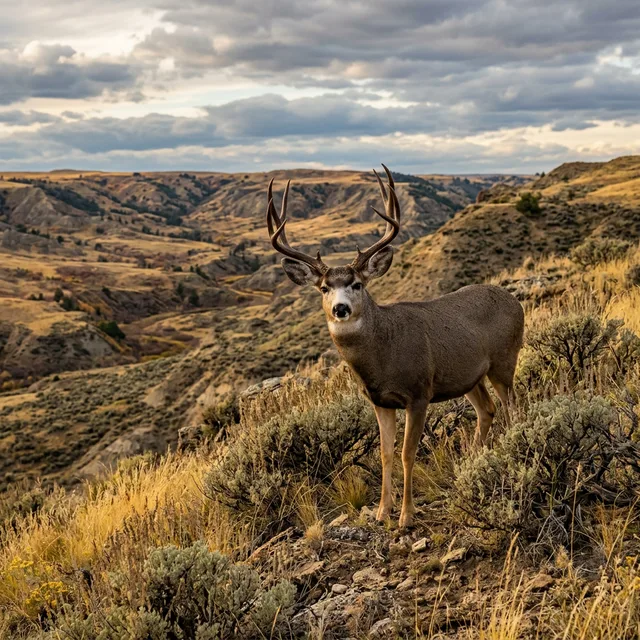
TL;DR — Key Takeaways
- Montana offers hunting for both mule deer and whitetail deer, with distinct habitat zones — mule deer dominate the west and breaks, whitetail thrive in river bottoms and agricultural edges.
- Major 2026 change: Resident deer tag limit reduced from 8 to 3 total (mule deer + whitetail combined). Non-resident general deer licenses reduced by ~2,500.
- Many mule deer B licenses (antlerless tags) are now restricted to private land only for 2026 and 2027.
- Non-residents obtain deer tags through the Combo License draw: Deer Combo ($760+) or Big Game Combo ($1,312+ includes elk). Application deadline: April 1.
- General rifle season runs October 24 – November 29; archery September 5 – October 18; muzzleloader December 12 – 20.
- Block Management Program (6.8M acres of enrolled private land) is especially critical for deer hunting, as much of Montana's best deer habitat is on private agricultural land.
Two Deer Species — Mule Deer vs Whitetail in Montana
Montana is one of the few states where hunters can pursue both mule deer and whitetail deer across dramatically different terrain. Understanding where each species lives — and how regulations differ — is fundamental to planning your hunt.
Species at a Glance
| Feature | Mule Deer | Whitetail |
|---|---|---|
| Typical habitat | Sagebrush, coulees, mountain slopes, breaks | River bottoms, creek drainages, ag fields |
| Body size (mature buck) | 180–250 lbs | 150–200 lbs |
| Antler style | Forked tines (bifurcated) | Single main beam with tines |
| Behavior | Tends to stop and look when alerted | Runs immediately, flag tail |
| Hunting method | Spot-and-stalk, glassing | Stand hunting, still hunting, rattling |
| Trophy potential | 160–190+ B&C common | 130–170+ B&C, exceptional 180+ |
| Primary regions | Western slopes, eastern breaks, SW mountains | NW valleys, central river bottoms |
Which Species Should You Target?
First-time Montana deer hunters should typically plan around whitetail if hunting western Montana (reliable populations in river corridors, familiar to eastern U.S. hunters) or mule deer if hunting central to eastern Montana (more open terrain, better glassing opportunities, unique to western hunting).
Your general deer license allows harvest of either species — one deer per license. If you want to hunt both, you'll need additional B licenses (antlerless tags), which have their own complex regulations.
2026 Tag Limit Changes — The Biggest Shake-Up in Years
The Montana Fish and Wildlife Commission approved sweeping changes to deer tag regulations starting in the 2026/2027 biennium. These changes affect both residents and non-residents.
Key 2026 Changes
| Change | Previous Rule | New 2026 Rule | Impact |
|---|---|---|---|
| Resident total deer tags | Up to 8 per year | 3 per year max | Dramatic reduction — mule deer + whitetail combined |
| NR general deer licenses | ~17,000+ available | Reduced by ~2,500 | Fewer NR deer tags in the draw |
| Mule deer B licenses | Many OTC on public + private | Most restricted to private land only | Limits antlerless mule deer harvest on public land |
| Deer B purchase date | Previously earlier | Changed to June 15 | Plan B license purchases after the combo draw |
| CWD management areas | Standard regulations | Extended seasons + mandatory testing | Special rules in CWD-detected zones |
Why These Changes Matter
For residents, the tag limit reduction from 8 to 3 is the headline story. Montana's mule deer populations have declined in several regions due to habitat loss and harsh winters, and FWP is responding with conservative harvest management.
For non-residents, the reduction of ~2,500 general deer licenses means the deer combo draw becomes slightly more competitive. If you were planning a deer-only hunt, consider building preference points to ensure you draw.
The private-land restriction on mule deer B licenses is particularly significant for public-land hunters. In many eastern Montana districts where BLM and Block Management access is key, antlerless mule deer hunting on public land will be severely limited. This change aims to protect mule deer doe populations while allowing private landowners (who bear the brunt of crop depredation) to manage numbers on their property.
Season Dates — Archery, General Rifle & Muzzleloader (2026)
Montana's deer seasons generally align with elk seasons, giving combo license holders the ability to hunt both species simultaneously.
| Season | 2026 Dates (Preliminary) | Method | Deer-Specific Notes |
|---|---|---|---|
| Archery | Sep 5 – Oct 18 | Bow (requires Bow & Arrow License) | Both mule deer and whitetail; rut hasn't started for either species |
| Youth Hunt | Oct 16 – Oct 17 | Any legal method | Hunters under 15 with a mentor |
| General Rifle | Oct 24 – Nov 29 | Rifle / any legal firearm | Whitetail rut peaks mid-November — best rifle timing for whitetail |
| Muzzleloader | Dec 12 – Dec 20 | Muzzleloader only | Late season; deer concentrated on winter range |
| Shoulder Seasons | Varies by district | Per district rules | Antlerless only; primarily for CWD management and damage control |
When to Hunt Each Species
Mule deer: Early rifle season (late October) before harsh weather pushes them to winter range. Mule deer bucks are more active and less wary before the rut intensifies. Spot-and-stalk is most effective with longer daylight and moderate temperatures.
Whitetail: The second half of November is prime time. Whitetail rut peaks from November 10–25 in Montana, when bucks are aggressively chasing does and are most vulnerable to calling, rattling, and stand hunting. This overlaps perfectly with the general rifle season.
Best Hunting Districts by Species
Top Mule Deer Districts
| District | Region | Public Access | Trophy Potential | Notes |
|---|---|---|---|---|
| HD 410 | Missouri Breaks | Excellent — BLM + BMA | Very high | Classic breaks country; some of MT's best muleys |
| HD 411 | Missouri Breaks | Good — BLM | High | Adjacent to 410; similar terrain, slightly less pressure |
| HD 620 | Musselshell | Moderate — BMA heavy | Good | Agricultural edge habitat; Block Management essential |
| HD 700 | Custer NF (SE) | Good — USFS + BLM | Good | Pine breaks, less NR pressure than western MT |
| HD 502 | Central MT | Moderate — BMA | Moderate | Mixed ag/prairie; overlooked by most hunters |
Top Whitetail Districts
| District | Region | Public Access | Trophy Potential | Notes |
|---|---|---|---|---|
| HD 204 | Bitterroot Valley | Good — USFS + river bottom | High | Classic NW Montana whitetail; river bottom corridors |
| HD 340 | Blackfoot Valley | Good — USFS + BMA | High | Mixed timber/ag; strong whitetail population |
| HD 446 | Big Belt Mountains | Good — USFS | Moderate-High | Mixed species zone; whitetail in draws and bottoms |
| HD 292 | Flathead Valley | Moderate — BMA + WMA | Moderate | Agricultural whitetail; excellent rut hunting |
| HD 261 | Deer Lodge | Moderate — USFS | Moderate | Mountain whitetail; less pressure |
Non-Resident Deer Hunting Strategy
Licensing Options
For non-residents, you have two combo options that include deer:
| Option | Cost | Includes | Best For |
|---|---|---|---|
| Big Game Combo | $1,312+ | Elk + Deer + Fishing + Upland Bird | Hunters who want both elk and deer |
| Deer Combo | $760+ | Deer + Fishing + Upland Bird | Deer-only hunters (most affordable NR option) |
Both enter the draw with April 1 deadline. Preference points ($100/year, max 3) apply. The 75/25 split gives zero-point applicants a 20–35% chance in the random pool.
Maximizing Your Deer Hunt
Combine with elk. The Big Game Combo is the best value if you plan to hunt both species. Since deer and elk share the same general rifle season (Oct 24 – Nov 29), you can hunt both simultaneously on the same trip.
Target the November rut for whitetail. Plan your trip for November 10–25 if whitetail is your priority. The rut makes bucks significantly more vulnerable, and this timing works well for both rifle whitetail and late-season mule deer.
Lean on Block Management. For deer hunting specifically, Block Management is more important than for elk. Much of Montana's best deer habitat — agricultural fields, CRP ground, river bottoms — is on private land enrolled in Block Management. Study the Hunter Access Guide carefully and contact BMA managers before your trip.
Use antlerless tags wisely. If you obtain a deer B license (purchase date June 15), understand the 2026 restrictions: most mule deer B licenses are private-land only. Whitetail B licenses may still be available on public land in some districts — check FWP regulations district by district.
Public Land Deer Hunting Strategies
National Forest Deer Hunting
Montana's 10 national forests hold deer populations throughout — but deer density on USFS land is typically lower than on adjacent private agricultural land. The exception is in transition zones where forest meets meadow or burn areas.
Best USFS deer strategies:
- Hunt the edges — where timber meets meadows, clearcuts, or burns
- Focus on creek bottoms and drainage corridors within the forest
- During rifle season, pressure from other hunters pushes deer onto USFS land from private ground
- December muzzleloader season concentrates deer on south-facing slopes at lower elevations
BLM Deer Hunting
BLM land in central and eastern Montana offers some of the state's best mule deer habitat — sagebrush flats, river breaks, and coulee systems.
- Missouri Breaks BLM — Classic mule deer country with rugged terrain and mature bucks
- Central Montana BLM — Scattered parcels mixed with private; check ownership maps carefully
- Southeast BLM — Powder River region with growing mule deer herds
Block Management for Deer
For deer, Block Management is arguably more valuable than for any other species in Montana. The program's 6.8 million enrolled acres include:
- CRP grasslands where whitetail bed and feed
- Agricultural fields that attract deer during morning and evening
- River bottoms and creek corridors that are otherwise inaccessible
- Ranch land connecting isolated public land parcels
Pro tip: Contact BMA managers in advance. Many are happy to share information about deer patterns, access points, and which parts of their property hold the best deer. Building relationships with landowners is the single best deer hunting strategy in Montana.
Chronic Wasting Disease (CWD) — What Hunters Need to Know
CWD has been detected in multiple Montana hunting districts, and FWP has implemented specific management measures:
Current CWD Regulations
- Mandatory carcass disposal in certain districts — whole carcasses and high-risk parts (brain, spinal cord) must be disposed of at designated sites
- Extended harvest seasons in some CWD-affected areas to reduce deer density
- Voluntary and mandatory testing — FWP provides free CWD testing at check stations and drop-off locations
- Transport restrictions — Hunters cannot transport whole carcasses from some CWD-positive districts to other parts of the state
CWD's Impact on Your Hunt
If hunting in a CWD management zone:
- Plan for on-site disposal — Know where the nearest CWD carcass disposal site is before you hunt
- Debone meat in the field — This avoids transport restrictions on brain/spinal tissue
- Submit samples — Help FWP track CWD prevalence by volunteering your harvest for testing
- Check current maps — CWD management zones expand as new detections occur; verify the latest boundaries on FWP's website before your trip
Processing & Transport
Montana law requires all edible meat to be salvaged from the field. For deer, this is more manageable than elk — a boned-out deer typically yields 50–80 lbs of meat.
Key Processing Tips
- Field dress immediately — Montana's variable temperatures (60°F in October, below freezing in November) make timing critical
- Game bags are essential — Protect meat from flies and dirt during transport to camp
- Processors fill up fast — Book a meat processor before rifle season opens, especially in popular hunting towns like Bozeman, Missoula, and Helena
- Shipping meat home — Most Montana processors offer vacuum-seal and ship services ($100–$200 for a whole deer via FedEx Ground)
Montana Deer Hunting FAQ
See the FAQ section below for the most common questions about Montana deer hunting.
Recommended Resources
Affiliate links — we may earn a commission at no extra cost to you. Learn more
Frequently Asked Questions
Can I hunt both mule deer and whitetail on the same tag in Montana?
Your general deer license allows you to harvest one deer — either a mule deer OR a whitetail. You cannot take one of each on a single general tag. To hunt a second deer, you need an additional B license (antlerless tag), which is species-specific and may be restricted to private land only in 2026.
How many deer tags can a non-resident get in Montana?
Non-residents receive one general deer tag through their Combo License draw (Deer Combo or Big Game Combo). Additional deer B licenses (antlerless) may be available for purchase starting June 15, but availability varies by district and many mule deer B licenses are restricted to private land only in 2026.
Why did Montana reduce the resident deer tag limit from 8 to 3?
Montana's Fish and Wildlife Commission reduced the limit to protect declining mule deer populations in several regions. Factors include habitat loss, harsh winter mortality, and unsustainable doe harvest in some areas. The new limit of 3 tags (mule deer + whitetail combined) aims to reduce overall harvest pressure while maintaining quality hunting opportunities.
What is the best time to hunt whitetail deer in Montana?
The peak whitetail rut in Montana runs from approximately November 10–25, coinciding perfectly with the general rifle season. Bucks are actively chasing does and are more vulnerable to calling, rattling, and stand hunting during this period. For mule deer, late October through early November is optimal before harsh weather pushes them to winter range.
Are mule deer B licenses still available on public land in Montana?
For 2026 and 2027, most mule deer B licenses (antlerless tags) are restricted to private land only. Exceptions exist in Region 1 (northwest Montana) and in areas where Chronic Wasting Disease (CWD) management or urban deer control programs are in place. Check FWP's district-specific regulations for current details.
How much does a non-resident deer hunt cost in Montana?
The Deer Combo License costs approximately $760 plus a $50 base hunting license, $10 conservation license, $15 AISPP, and $5 application fee — totaling about $840 in tag costs. A complete DIY trip including travel, lodging, and food can be done for $1,800–$3,000. This makes Montana one of the more affordable western deer hunting destinations for non-residents.
What is CWD and does it affect deer hunting in Montana?
Chronic Wasting Disease (CWD) is a fatal neurological disease affecting deer, elk, and moose. CWD has been detected in several Montana hunting districts, leading to mandatory carcass disposal, extended seasons in some areas, and transport restrictions. Hunters should check FWP's CWD map before their trip and plan for proper carcass handling in affected districts. CWD cannot infect humans, but FWP recommends against consuming meat from CWD-positive animals.
Should I use Block Management for deer hunting in Montana?
Absolutely. Block Management is arguably more important for deer hunting than any other species in Montana. Much of the state's best deer habitat — agricultural fields, CRP grasslands, river bottoms — is on private land enrolled in the program. The 6.8 million enrolled acres provide free access with your hunting license. Study the FWP Hunter Access Guide (published August 15) and contact BMA managers in advance for the best results.