
Montana Non-Resident Hunting 2026: Draw Odds, Combo Licensing & Trip Planning
Everything out-of-state hunters need to know about drawing tags, planning logistics, and making the most of Montana's world-class hunting.
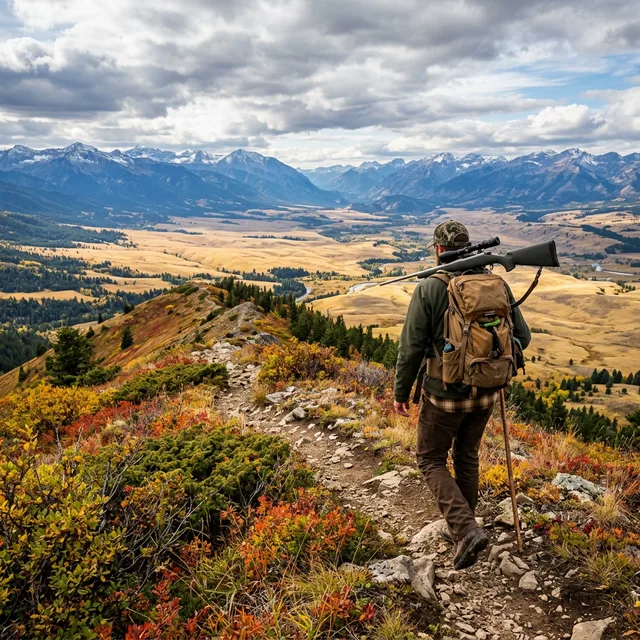
TL;DR — Key Takeaways
- Montana requires non-residents to purchase Combination Licenses through a draw — you cannot buy standalone elk or deer tags.
- Three combo options: Big Game (elk+deer, $1,312+), Elk-only ($1,112+), or Deer-only ($760+). All include fishing and upland bird.
- Preference points cost $100/year (max 3). The draw splits 75% to highest-point applicants and 25% randomly. Most hunters draw within 1–2 years.
- For 2026: ~2,500 fewer NR deer tags, mule deer B licenses restricted to private land, upland bird season delayed 10 days on public land.
- Super Tags ($50 raffle tickets, deadline June 30) let you hunt any species statewide regardless of district or season — worth entering every year.
- Block Management Program adds 6.8 million acres of free private land hunting access — a massive advantage for non-residents.
Understanding Montana's Non-Resident Combo System
Montana's licensing system is fundamentally different from most Western states. Instead of selling standalone species tags, Montana bundles big game licenses into Combination Licenses that include multiple hunting and fishing privileges in a single package.
For non-residents, this means you cannot simply buy an elk tag or deer tag à la carte. You must enter the annual draw for one of three combo packages, each of which includes a season fishing license and an upland bird license in addition to your big game tags.
The Three Combo Options Compared
| Feature | Big Game Combo | Elk Combo | Deer Combo |
|---|---|---|---|
| License Fee | $1,312+ | $1,112+ | $760+ |
| General Elk Tag | ✓ | ✓ | ✗ |
| General Deer Tag | ✓ | ✗ | ✓ |
| Season Fishing | ✓ | ✓ | ✓ |
| Upland Bird | ✓ | ✓ | ✓ |
| Application Deadline | April 1 | April 1 | April 1 |
| Preference Points Used | Elk PP pool | Elk PP pool | Deer PP pool |
| Best For | Elk + deer hunters | Elk-only hunters | Deer-only hunters |
Additional required purchases (all combos):
- Conservation License: $10
- Base Hunting License: $50
- Aquatic Invasive Species Prevention Pass (AISPP): ~$15
- Non-refundable application fee: $5
- Bow & Arrow License: $10 (if archery hunting)
Why Montana Bundles Licenses
Montana's combo system is intentional — it ensures non-resident license revenue supports multiple wildlife management programs (fisheries, upland bird habitat, etc.) rather than concentrating all funding on big game alone. The practical upside for hunters: your combo includes fishing and upland bird privileges at no extra cost, giving you options for downtime between big game hunts.
Draw Odds by Species — Realistic Expectations
Two Point Systems — Don't Confuse Them
Montana uses two completely different point systems, and mixing them up is the most common mistake non-residents make:
| System | Used For | How It Works | Cost |
|---|---|---|---|
| Preference Points | Combo licenses (elk, deer, Big Game) | 75% of tags to highest-point holders, 25% random | $100/year |
| Bonus Points | Special permits, moose, sheep, goat, antelope | Each point is squared (10 pts = 100 entries), but still a lottery | Included in application fee |
Preference points are predictable — build 2–3 points and you're nearly guaranteed a combo license. Bonus points are a lottery boost — they improve your odds incrementally but don't guarantee anything.
Preference Point Strategy — Multi-Year Investment
Year-by-Year Planning
For a first-time Montana non-resident, here's the optimal strategy:
Year 1 — Apply with 0 points: You have a 15–30% shot at drawing in the random pool. If you draw, great — hunt that fall. If not, you earn 1 preference point.
Year 2 — Apply with 1 point: Your odds jump to 50–70% in the preference point pool. Most hunters draw in Year 2.
Year 3 — Apply with 2 points: Odds are 85–95%. Very few hunters go undrawn with 2 points.
Year 4 — Maximum points (3): Virtually guaranteed draw. Montana caps preference points at 3, so this is the ceiling.
Alternative: Buy points without applying. If you're not ready to commit to a trip, purchase a preference point ($100 + $10 conservation license = $110/year) during July 1 – December 31. You cannot apply for a combo license AND buy a point in the same year — it's one or the other.
Party Applications
Up to 5 hunters can apply as a party. The party's preference points are averaged to the lowest whole number. This is advantageous if all party members have similar point levels, but can hurt if one member has significantly fewer points.
Outfitter Preference Points
Montana offers a unique incentive: hunters who apply through a licensed Montana outfitter can purchase an additional outfitter preference point, giving them a potential edge in the draw. This makes guided hunts slightly more accessible for non-residents, though the additional point cost and outfitter fee add up quickly.
Super Tag Opportunities — The Ultimate Lottery
Montana's Super Tag program is a must-enter lottery for every non-resident. For $50 per species, you can enter a raffle for tags that let you hunt any species in any district during any legal season — the ultimate Montana hunting tag.
| Super Tag Species | Entry Fee | What You Get |
|---|---|---|
| Elk | $50 | Hunt any elk statewide, any district, any season |
| Deer | $50 | Hunt any deer statewide |
| Moose | $50 | Once-in-a-lifetime moose — without burning your draw chance |
| Bighorn Sheep | $50 | The dream tag |
| Mountain Goat | $50 | Ultra-limited — one of only a handful of NR goat tags |
| Antelope | $50 | Pronghorn in the best districts |
Deadline: June 30 each year. Revenue supports FWP habitat and access programs. For $300 total (all 6 species), it's the highest-value hunting lottery in the West.
Best Districts for First-Time Non-Residents
Choosing a hunting district can be overwhelming with 300+ options. Here's a curated shortlist for first-timers:
For Elk (General Tag)
| District | Region | Why It's Good for NR | Terrain |
|---|---|---|---|
| HD 380 | Helena NF | Road-accessible USFS, moderate terrain | Mixed timber & parks |
| HD 411 | Missouri Breaks | BLM + Block Mgmt, lower pressure, shoulder season | Prairie coulees & breaks |
| HD 590 | Central MT | Growing herds, accessible private through BMA | Open prairie & timber edges |
| HD 282 | Bob Marshall | Exceptional backcountry, general tag valid | Wilderness basins |
| HD 700 | Custer NF | Southeast MT, overlooked, healthy herds | Pine breaks & ridges |
For Mule Deer (General Tag)
| District | Region | Why It's Good for NR | Notes |
|---|---|---|---|
| HD 410 | Missouri Breaks | BLM breaks habitat, trophy potential | Some B tags private-only in 2026 |
| HD 620 | Musselshell | Agricultural edge, good mule deer | Block Management key |
| HD 700 | Southeast | Lower pressure, pine ridge habitat | Long drive from airports |
For Whitetail (General Tag)
| District | Region | Why It's Good for NR | Notes |
|---|---|---|---|
| HD 204 | Bitterroot Valley | River bottom whitetails, accessible | Higher NR pressure |
| HD 340 | Blackfoot Valley | Mix of USFS and BMA land | Near Missoula |
| HD 446 | Big Belt Mtns | Strong whitetail population | Helena area |
Trip Planning — Airports, Lodging, Guides & DIY
Major Airports & Drive Times
| Airport | Code | Nearest Hunting Regions | One-Way Drive |
|---|---|---|---|
| Bozeman | BZN | Gallatin, Bitterroot, SW Montana | 0.5–3 hours |
| Missoula | MSO | Bitterroot, Bob Marshall, NW Montana | 0.5–4 hours |
| Billings | BIL | Custer NF, Missouri Breaks, Central MT | 1–4 hours |
| Great Falls | GTF | Bob Marshall, Helena NF, Missouri Breaks | 1–3 hours |
| Helena | HLN | Helena NF, Big Belt, Central MT | 0.5–2 hours |
Tip: Billings and Great Falls often have cheaper flights than Bozeman, which has become a major tourist hub. If hunting eastern Montana's breaks or central districts, Billings is the best gateway.
Lodging Options
- Dispersed camping: Free on USFS and BLM land. Popular during rifle season — arrive early for good spots.
- RV parks / private campgrounds: $20–$50/night. Book ahead for November rifle season.
- Motels in gateway towns: $80–$150/night. Towns like Lewistown, Choteau, Dillon, and Miles City have hunter-friendly lodging.
- Guided hunts with lodging: $5,000–$8,500 per hunter for 5–7 day elk hunts. Wall tent camps or lodge-based.
Transporting Game Across State Lines
Montana requires specific documentation for transporting big game:
- Evidence of sex must remain attached to one quarter until the animal reaches your home or a processor
- CWD regulations may restrict transport of certain parts (brain, spinal cord) from some districts
- Meat shipping: Many Montana processors offer vacuum-seal and ship services ($150–$300 for a whole elk). FedEx Ground with dry ice is the standard shipping method.
- Check your home state's import regulations — some states require CWD testing documentation for imported cervid carcasses
Montana Non-Resident Hunting FAQ
See the FAQ section below for answers to the most common non-resident questions.
Recommended Resources
Affiliate links — we may earn a commission at no extra cost to you. Learn more
Frequently Asked Questions
How do I apply for a Montana non-resident hunting license?
Applications are submitted online at fwp.mt.gov during the March 1 – April 1 window (for elk/deer combos). You'll need to create a MyFWP account, purchase a Conservation License ($10) and Base Hunting License ($50), then submit your combo application with the $5 non-refundable fee. Draw results are posted to your account in mid-May.
Can non-residents hunt elk without entering the draw in Montana?
No. All non-resident elk hunting in Montana requires a Combination License obtained through the annual draw. There are no over-the-counter elk tags for non-residents. However, Super Tags ($50 raffle entry, deadline June 30) offer an alternative path for those lucky enough to draw one.
What happens to my preference points if I don't draw?
If you apply for a combo license and don't draw, you earn one preference point automatically. Your total points carry forward to the next year. If you DO draw, your preference points reset to zero. You can also buy a point ($100) without applying during July 1 – December 31, but you cannot apply AND buy a point in the same year.
Is it worth paying for a Montana outfitter as a non-resident?
It depends on your experience level and goals. Guided hunts ($5,000–$8,500 for elk) provide experienced guides, local knowledge, pack stock for backcountry access, and typically 40–60% bull elk success rates vs. 10–18% DIY. First-timers and those with limited vacation days often find the investment worthwhile. Outfitter clients also get access to an additional preference point.
What is the cheapest way to hunt in Montana as a non-resident?
The most affordable option is the Deer Combo ($760 + fees ≈ $840 total). Combine it with free dispersed camping on BLM or USFS land, cook your own food, and use Block Management for private land access. A complete DIY deer hunt can be done for under $2,000 including travel from most parts of the lower 48.
Can non-residents hunt on Montana's Block Management areas?
Yes. The Block Management Program is available to all hunters with a valid Montana hunting license, including non-residents. There's no additional fee. FWP publishes the Hunter Access Guide by August 15 each year listing all enrolled properties and their specific rules. Many BMAs are walk-in, while some require advance sign-up.
What are the new 2026 regulations that affect non-residents?
Key 2026 changes for non-residents: approximately 2,500 fewer NR general deer licenses will be available; many mule deer B licenses are restricted to private land only; non-residents hunting upland birds on public land start 10 days after residents (except mountain grouse); black bear now requires a draw permit; all bighorn sheep applications must go through the draw (no more unlimited OTC). Elk combo draw structure remains largely unchanged.
Can I hunt multiple species with one Montana combo license?
The Big Game Combo includes both a general elk and general deer tag, plus fishing and upland bird privileges. You can hunt elk, deer, upland birds, and fish — all on one combo. For additional species like antelope, bear, moose, sheep, or goat, you must apply in separate drawings. Super Tags cover any single species statewide if drawn.