
California Waterfowl & Duck Hunting 2026: Pacific Flyway Season, Zones, Stamps & Best Regions
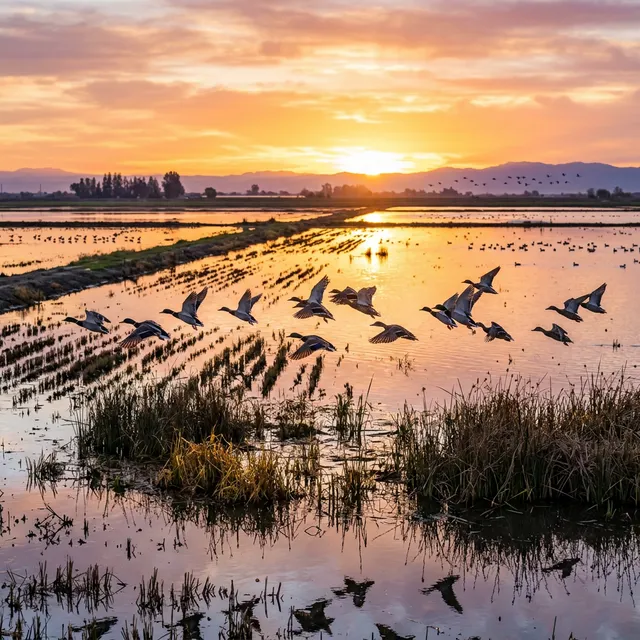
Hunt the heart of the Pacific Flyway — where 4–6 million waterfowl winter across Sacramento Valley marshes, rice fields, and coastal wetlands.
Planning Notes
- California sits at the heart of the Pacific Flyway — 4 to 6 million waterfowl winter in the state each year.
- The Sacramento Valley hosts roughly 60% of the Pacific Flyway's wintering waterfowl population.
- Duck daily bag limit is 7 (with species sub-limits); goose limit is up to 30 depending on zone.
- You need a hunting license + CA Duck Validation ($39.96 res.) + Federal Duck Stamp proof for hunters age 16+ + HIP registration.
- Non-lead shot is mandatory statewide — steel, bismuth, or tungsten only.
In This Guide 9 sections
- Why California Is a World-Class Waterfowl Destination
- Waterfowl Hunting Zones
- Bag Limits
- Required Licenses, Stamps, and Registrations
- Best Waterfowl Hunting Regions
- Non-Lead Shot: Waterfowl Requirements
- Public Hunting Reservation System
- Waterfowl Hunting Tactics for California
- California Waterfowl Hunting FAQ
Why California Is a World-Class Waterfowl Destination
California occupies a unique position as the Pacific Flyway's primary terminus — the final destination for millions of ducks and geese migrating south from breeding grounds in Alaska, Canada, and the Pacific Northwest. The state's Central Valley, a 450-mile corridor of agricultural land and managed wetlands, serves as winter habitat for an estimated 4 to 6 million waterfowl annually.
Key facts that make California waterfowl hunting exceptional:
- 60% of the Pacific Flyway's wintering population concentrates in the Sacramento Valley
- 107-day duck season — one of the longest frameworks allowed by federal regulation
- 7-duck daily bag limit with generous species sub-limits
- Massive goose numbers — up to 30 geese per day in some zones
- Diverse hunting environments — flooded rice fields, managed marshes, river bottoms, and coastal estuaries
- National Wildlife Refuges — world-famous public hunting on Sacramento NWR Complex
The Sacramento and San Joaquin valleys combined produce more rice than any other region in the western U.S. — and when those fields flood after harvest, they create millions of acres of de facto wetland habitat that attract staggering concentrations of waterfowl.
Waterfowl Hunting Zones
California divides the state into five waterfowl hunting zones, each with slightly different season dates:
Season Dates by Zone (2026-2027)
| Zone | Duck Season | Scaup Season | Goose Season |
|---|---|---|---|
| Northeastern | Oct 3 – Jan 13 | Oct 3 – Nov 29 & Dec 17 – Jan 13 | Oct 3 – Jan 27 |
| Balance of State | Oct 17 – Jan 27 | Nov 3 – Jan 27 | Oct 17 – Mar 10 (white geese) |
| S. San Joaquin Valley | Oct 17 – Jan 27 | Nov 3 – Jan 27 | Oct 17 – Mar 10 (white geese) |
| Southern California | Oct 17 – Jan 27 | Nov 3 – Jan 27 | Oct 17 – Mar 10 (white geese) |
| Colorado River | Oct 17 – Jan 27 | Nov 3 – Jan 27 | Oct 17 – Jan 27 |
Special youth waterfowl hunt and veteran hunt days also available in each zone — dates vary. Check CDFW for exact dates.
Bag Limits
Duck Bag Limits
The daily duck bag limit is 7 ducks, which may include:
| Species | Daily Limit | Notes |
|---|---|---|
| Mallard | 7 (max 2 females) | Most common CA duck |
| Pintail | 3 | Increased from 1 for 2026-2027 |
| Canvasback | 2 | Diver species |
| Redhead | 2 | Diver species |
| Scaup | 2 | Split season in most zones |
| All other ducks | 7 combined | Wigeon, teal, gadwall, etc. |
| Possession Limit | 21 (3× daily) | Applies to all species |
Goose Bag Limits (Balance of State Zone)
| Species | Daily Limit | Possession Limit |
|---|---|---|
| White geese (Snow/Ross's) | 20 | 60 |
| Dark geese (Canada/Cackling) | 10 | 30 |
| White-fronted geese | 3* | 9 |
| Total maximum | 30 | 90 |
*White-fronted goose limits are further restricted in the Sacramento Valley Special Management Area to 3 per day.
Required Licenses, Stamps, and Registrations
California waterfowl hunting requires the most layers of licensing of any type of hunting in the state:
| Requirement | Cost (Resident) | Cost (Non-Res.) | Notes |
|---|---|---|---|
| Hunting License | $62.90 | $219.81 | Base requirement |
| CA Duck Validation | $39.96 | $39.96 | State stamp — same price for all |
| Federal Duck Stamp | Confirm official checkout | Confirm official checkout | Required for migratory waterfowl hunters age 16+; E-Stamp/vendor fees can apply |
| HIP Registration | Free | Free | Harvest Information Program — mandatory for all migratory bird hunters |
| Upland Game Bird Val. | $24.84 | $24.84 | Only if also hunting upland birds |
| Planning subtotal before Federal checkout | $102.86 + Federal checkout | $259.77 + Federal checkout | Use CDFW/FWS checkout for the final total |
Where to Buy
- Hunting license + CA Duck Validation: Online at ca.wildlifelicense.com or license vendors
- Federal Duck Stamp: Post offices, national wildlife refuge visitor centers, the official U.S. Fish and Wildlife Service Duck Stamp purchase page, or a state licensing portal
- HIP Registration: Free online registration through CDFW's system — you'll receive a HIP number to record on your license
Pro Tip: The Federal Duck Stamp must be signed in ink across the face of the stamp before it's valid. Many hunters forget this step. The stamp also gives you free entry to national wildlife refuges — a bonus perk worth $3 per visit.
Best Waterfowl Hunting Regions
Sacramento Valley — The Pacific Flyway's Heart
The Sacramento Valley is consistently ranked among the top 5 waterfowl hunting destinations in North America. The combination of the Sacramento National Wildlife Refuge Complex, millions of acres of flooded rice fields, and strategic position on the Pacific Flyway creates unmatched concentrations of waterfowl.
Top public hunting areas:
- Sacramento National Wildlife Refuge — World-famous, with public hunting sections open since 1950. Hosts hundreds of thousands of ducks and geese during peak migration
- Delevan National Wildlife Refuge — Renowned for having one of the highest duck-per-hunter averages in the state
- Colusa National Wildlife Refuge — Excellent walk-in access and managed blinds
- Sutter National Wildlife Refuge — Less pressure, good mallard and pintail numbers
- Gray Lodge Wildlife Area — State-managed, reservation-based hunting with maintained blinds
Private land opportunities:
- Rice field hunts on private land are the premium California waterfowl experience
- Many guide services lease access to prime fields in Butte, Glenn, Colusa, and Yolo counties
- Flooded rice stubble attracts massive concentrations of mallards, pintail, and geese
San Joaquin Valley — Southern Central Valley
The San Joaquin Valley offers excellent waterfowl hunting in the flooded agricultural lands around Kern, Tulare, and Kings counties. Less crowded than the Sacramento Valley, this region attracts significant late-season goose concentrations.
Key areas:
- Kern National Wildlife Refuge
- Pixley National Wildlife Refuge
- Los Banos Wildlife Area — State management, managed blinds
Coastal Wetlands — San Francisco Bay and Beyond
Coastal hunters can pursue sea ducks, brant, and other species in the tidal marshes and estuaries along the California coast. Suisun Marsh (northeast of San Francisco Bay) is the largest brackish marsh in the West Coast and offers excellent waterfowl hunting.
Key areas:
- Suisun Marsh — Grizzly Island Wildlife Area, managed by CDFW
- San Pablo Bay National Wildlife Refuge
- Humboldt Bay NWR — Northern coast waterfowl
Non-Lead Shot: Waterfowl Requirements
Federal law has required non-toxic shot for waterfowl hunting nationwide since 1991, and California's statewide non-lead mandate reinforces this. For waterfowl, your options include:
| Shot Type | Approx. Cost (25 rds) | Performance | Notes |
|---|---|---|---|
| Steel | $15–$25 | Good | Most affordable; works well in 12ga 3" |
| Bismuth | $30–$50 | Excellent | Denser than steel; safe in older guns |
| Tungsten (TSS/ITX) | $40–$80 | Premium | Hardest-hitting; allows smaller shot sizes |
| Steel/Bismuth blend | $25–$35 | Good+ | Compromise of cost and performance |
Choke Tip: Steel shot performs best with modified or improved cylinder chokes. Do NOT use tight full chokes with steel — it can damage your barrel and produce inconsistent patterns. Bismuth and tungsten are safe in all chokes.
Public Hunting Reservation System
Many of California's state-managed waterfowl areas operate on a reservation system during peak season. Here's how it works:
- Online reservations open several weeks before the season through CDFW's system
- Lottery-based — High-demand areas like Gray Lodge and Grizzly Island use blind-draw lotteries
- Walk-in areas — Some portions of wildlife areas are first-come, first-served
- Blind assignments — Hunters are assigned numbered blinds and shooting positions
- Check-in/check-out — You must report your harvest at the check station when leaving
Tips for the Reservation System
- Apply for lottery reservations early — popular weekends fill fast
- Mid-week hunts (Tuesday–Thursday) have much less competition
- Walk-in "free roam" areas near established blinds can be productive
- Some areas allow self-check-in via the CDFW app after opening weeks
Waterfowl Hunting Tactics for California
Rice Field Hunting (Decoy Spreads)
The classic California waterfowl experience is hunting over a large decoy spread in a flooded rice field:
- Spread size: 6–12 dozen decoys is standard for rice field hunts
- Species mix: Mallard, pintail, wigeon, and teal decoys in realistic poses
- Layout blinds: Most rice field hunts use layout blinds concealed in stubble
- Spinning-wing decoys: Legal and effective in California — adds motion to the spread
- Calling: Mallard calls, pintail whistles, and goose calls are essential
Marsh Hunting (Natural Blinds)
On wildlife refuges and managed marshes:
- Tule seat or permanent blind — Assigned blinds provide concealment in marsh vegetation
- Smaller spreads — 3–6 dozen decoys in open water pockets
- Patience — Let birds work the spread; marsh birds decoy closer than field birds
- Jump shooting — Walking levees and flushing ducks from channels is productive for teal
California Waterfowl Hunting FAQ
- Federal Duck Stamp Guide: Who Needs One, Proof, HIP, and State Waterfowl Items A practical Federal Duck Stamp guide for waterfowl hunters: who needs it, how E-…
- California Deer Hunting 2026: Complete Guide to Zones, Tags, Draw System & Best Regions Complete California deer hunting guide for 2026. Learn about zones A–X, preferen…
- Hunting on Public Land: License, Access, and Property Rules Use this public-land workflow to separate state hunting licenses, BLM and nation…
Frequently Asked Questions
How many ducks can I shoot per day in California?
The daily duck bag limit is 7 ducks, which may include up to 7 mallards (max 2 female), 3 pintail, 2 canvasback, 2 redhead, and 2 scaup. The possession limit is 21 (triple the daily bag). Species sub-limits apply within the total.
What stamps do I need for waterfowl hunting in California?
You need a California hunting license, a CA Duck Validation ($39.96), Federal Duck Stamp proof for migratory waterfowl hunters age 16+, and free HIP registration. Before the federal checkout, the California license and validation subtotal is $102.86 for residents and $259.77 for non-residents; confirm the final stamp total through FWS, CDFW, or the state portal.
When does duck season open in California?
Season dates vary by zone. The Northeastern Zone opens earliest (around October 4), while the Balance of State, Southern San Joaquin, Southern California, and Colorado River zones typically open around October 18. The season runs approximately 107 days.
Where is the best duck hunting in California?
The Sacramento Valley is the premier waterfowl region, hosting about 60% of the Pacific Flyway's wintering population. Top spots include Sacramento NWR, Delevan NWR, Gray Lodge Wildlife Area, and private rice field leases in Butte, Glenn, and Colusa counties.
Can I use lead shot for duck hunting in California?
No. Lead shot has been banned for waterfowl hunting nationwide since 1991, and California's statewide non-lead mandate further prohibits it. Use steel, bismuth, or tungsten shot for all waterfowl hunting.
How do I get a public hunting reservation in California?
Many state wildlife areas use a reservation system. Apply online through CDFW's system before the season. High-demand areas like Gray Lodge use a lottery for blind assignments. Walk-in "free roam" areas are also available at most wildlife management areas.
What is a Federal Duck Stamp and where do I buy one?
The Federal Duck Stamp is required for migratory waterfowl hunters age 16 and older nationwide. It funds wetland habitat acquisition. Buy it at post offices, national wildlife refuge visitor centers, the official U.S. Fish and Wildlife Service Duck Stamp purchase page, or participating state portals. Confirm the current checkout total because E-Stamp or portal fees can apply, and sign the physical stamp in ink when required.
Can non-residents hunt ducks in California?
Yes. Non-residents need a non-resident hunting license ($219.81), CA Duck Validation ($39.96), Federal Duck Stamp proof for migratory waterfowl hunters age 16+, and free HIP registration. The California subtotal before the federal stamp checkout is $259.77; no draw or preference points are needed for the license layer.