
Michigan Bear & Elk Hunting: Draw Applications, Seasons & Upper Peninsula Guide
How to apply for Michigan's bear and elk draws, understand preference points, and plan your once-in-a-lifetime Upper Peninsula hunt.
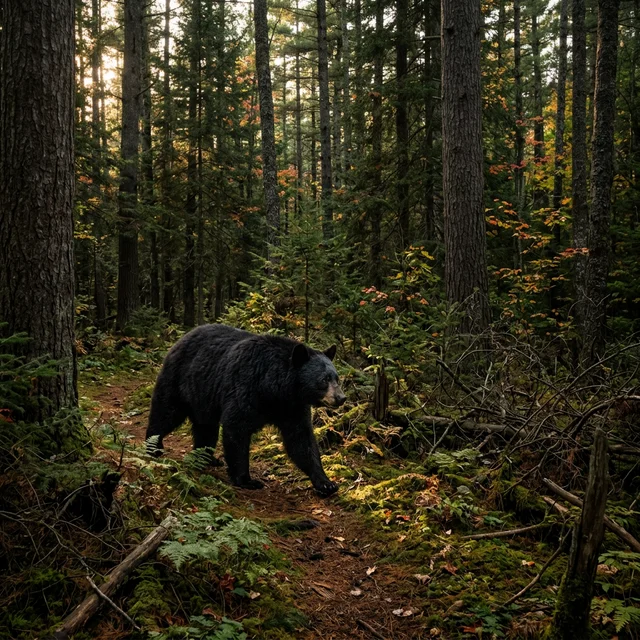
TL;DR — Key Takeaways
- Bear hunting requires a draw application — apply May 1 through June 1 each year ($5 fee).
- Michigan uses a preference point system for bear: each unsuccessful application earns one point.
- Bear season runs September through October, primarily in the Upper Peninsula across 7 Bear Management Units.
- Elk tags are ultra-limited (approximately 200 per year) and restricted to Michigan residents only.
- Elk hunting occurs near Gaylord in the northern Lower Peninsula — the only free-ranging elk herd east of the Mississippi.
- Both bear and elk licenses cost $30 and $125 respectively, regardless of residency (if drawn).
In This Guide 9 sections
- Black Bear Hunting in Michigan — Overview
- Bear Draw Application Process & Preference Points
- Bear Management Units (BMUs)
- Bear Hunting Methods in Michigan
- Bear License Cost & Requirements
- Field Dressing & Meat Processing
- Elk Hunting in Michigan — The Eastern Elk Capital
- Planning Your Michigan Bear or Elk Hunt
- Michigan Bear & Elk Hunting FAQ
Black Bear Hunting in Michigan — Overview
Michigan is home to one of the largest black bear populations in the eastern United States, estimated at 12,000 to 15,000 bears — the vast majority living in the Upper Peninsula. With a well-managed draw system and consistently high success rates, Michigan offers one of the best black bear hunting opportunities east of the Rockies.
Unlike trophy elk or mountain goat hunts in western states that can require decades of point accumulation, Michigan's bear draw is realistically achievable for dedicated hunters within 3 to 7 years of persistent applications, depending on the Bear Management Unit selected. This makes it an accessible "bucket list" hunt for Midwestern and Great Lakes region hunters.
The Michigan Department of Natural Resources (DNR) manages bear hunting through a quota-based system across seven Bear Management Units (BMUs), with separate allocations for residents and non-residents.
Bear Draw Application Process & Preference Points
How to Apply
- Application Period: May 1 through June 1 each year
- Application Fee: $5 (non-refundable)
- Where to Apply: Online at michigan.gov/dnrlicenses, through the Michigan DNR Hunt Fish app, or at any authorized license agent
- Results Posted: Approximately June 23 each year
Understanding Preference Points
Michigan uses a preference point system for bear hunting — meaning applicants with the most points are selected first:
- Each unsuccessful application earns one preference point.
- Points accumulate year after year as long as you continue to apply.
- When drawn, your preference points reset to zero.
- You can only apply for one BMU per year — choose strategically.
The system rewards persistence. Unlike a pure lottery (where a first-time applicant has the same odds as a 10-year veteran), Michigan's preference point system gives dedicated applicants a clear path to eventually drawing a tag.
Application Strategy
Pro tip: If your primary goal is drawing a tag quickly, apply for BMUs with higher quotas and historically lower point thresholds. The Red Oak (Baldwin) and Gladwin units typically have shorter wait times than the popular Upper Peninsula units like Baraga or Newberry.
Bear Management Units (BMUs)
Michigan divides its bear range into 7 Bear Management Units, each with independent quotas, season dates, and point thresholds. The majority of bear population and hunting opportunity is concentrated in the Upper Peninsula.
| BMU | Region | Approx. Quota | Typical Wait (Points) | Season Dates (2026) |
|---|---|---|---|---|
| Amasa | Western UP | 200–250 | 4–6 years | Sep 9 – Oct 26 |
| Baraga | Central UP | 250–300 | 6–8 years | Sep 9 – Oct 26 |
| Bergland | Western UP | 150–200 | 4–6 years | Sep 9 – Oct 26 |
| Carney | Southern UP | 150–175 | 5–7 years | Sep 9 – Oct 26 |
| Newberry | Eastern UP | 250–300 | 6–8 years | Sep 9 – Oct 26 |
| Baldwin (Red Oak) | Northern LP | 200–250 | 3–5 years | Sep 7 – Oct 26 |
| Gladwin | Central LP | 100–150 | 2–4 years | Sep 7 – Oct 26 |
Resident vs Non-Resident Allocation
Both residents and non-residents can apply for bear tags. However, the DNR historically allocates the majority of tags to residents, with non-residents receiving a smaller percentage of the total quota. Non-residents can expect somewhat longer wait times on average.
Bear Hunting Methods in Michigan
Michigan allows three primary methods for black bear hunting:
1. Baiting (Most Popular)
Bear baiting is the most common and successful hunting method in Michigan. An estimated 80%+ of Michigan's bear harvest comes from bait stations.
- Bait types: Commonly used baits include pastries, trail mix, granola, grease, and used cooking oil mixed with various sweet foods.
- Regulations: Bait stations must be registered with the DNR. You can establish up to 3 active bait sites per hunter.
- Timing: Most successful hunters start baiting 4–6 weeks before the season to establish patterns.
- Placement: Bait should be placed in areas with heavy cover near travel corridors — look for trails between bedding areas and natural food sources (berry patches, oak stands).
2. Hunting with Hounds
Hound hunting is legal in Michigan during specific periods of the bear season:
- Dogs can be used to pursue bears beginning on the first day of bear season in the hunter's BMU.
- A maximum of 6 dogs may be used per hunting party.
- All dogs must be licensed and vaccinated against rabies.
- GPS tracking collars are permitted on hounds.
3. Spot-and-Stalk
While less common than baiting, spot-and-stalk hunting is legal throughout bear season. This method is most effective in areas with seasonal food concentrations — berry patches in September or oak ridges dropping acorns in October.
Bear License Cost & Requirements
| Item | Cost |
|---|---|
| Bear Application Fee | $5 |
| Bear Participation License (if drawn) | $30 |
| Base Hunting License (required) | $15 (resident) / $200 (non-resident) |
| Total if drawn | $50 resident / $235 non-resident |
All bear hunters must also possess a valid base hunting license in addition to the bear participation license.
Field Dressing & Meat Processing
Black bear meat is excellent table fare when properly handled — it's rich, slightly sweet, and works well in roasts, stews, sausage, and even jerky. However, proper handling is critical:
- Cooling: Bear fat is thick and insulates the carcass. Field dress immediately and get the hide off quickly to promote cooling, especially in September when temperatures can still be warm.
- Trichinella: All bear meat must be cooked to an internal temperature of 165°F to kill potential Trichinella parasites. Never consume bear meat rare or medium.
- Fat rendering: Bear fat (lard) is prized by outdoor enthusiasts and bakers. Rendered bear fat makes excellent pie crusts and cooking oil.
Elk Hunting in Michigan — The Eastern Elk Capital
Michigan is home to the only free-ranging elk herd east of the Mississippi River — approximately 1,100 to 1,300 animals concentrated in a small region of the northern Lower Peninsula near the town of Gaylord. This makes a Michigan elk tag one of the most coveted and difficult-to-obtain hunting permits in the eastern United States.
History of Michigan's Elk Herd
Michigan's elk herd traces its origins to a 1918 reintroduction when 7 Rocky Mountain elk were released in the Pigeon River Country area near Gaylord. From that small founding population, the herd grew — sometimes contentiously — to its current size. The DNR began managing the herd through controlled hunts in 1984, using annual harvests to keep the population in balance with available habitat and to minimize crop damage on surrounding agricultural lands.
Elk Hunting Area
All elk hunting in Michigan occurs within a defined Elk Management Area covering portions of four counties in the northern Lower Peninsula:
- Otsego County (Gaylord area — epicenter of the elk range)
- Montmorency County
- Cheboygan County
- Presque Isle County
The total elk range is roughly 600 square miles of mixed state forest, private land, and agricultural areas. The DNR divides this into multiple Elk Management Units (EMUs, not to be confused with the bird) with separate quotas and season structures.
Elk Draw Application
- Eligibility: Michigan residents only — non-residents cannot apply for elk licenses.
- Application Period: May 1 through June 1 (same window as bear)
- Application Fee: $5 (non-refundable)
- Drawing System: Weighted lottery (not pure preference points). This means applicants who have applied more times get higher odds, but a first-time applicant still has a chance — just a smaller one.
- Tags Issued: Approximately 200 elk licenses per year — making this one of the most limited hunts in the nation.
- License Cost (if drawn): $125
With over 100,000 applicants competing for roughly 200 tags each year, the odds for a first-time applicant are well under 1%. However, the weighted lottery progressively improves your odds with each consecutive application. Many successful applicants have applied for 10–20+ years before drawing a tag.
Elk Season Structure
The Michigan elk season is approximately 45 days long, typically spanning from early September through mid-October. The season is divided into several hunt periods:
| Period | Type | Dates (2026) | Notes |
|---|---|---|---|
| Period 1 | Any Elk (antlered/antlerless) | Sep 1–4, 11–14 | Most coveted for bull hunters |
| Period 2 | Antlerless Only | Sep 18–21 | Cow/calf harvest |
| Period 3 | Any Elk | Dec 12–20 | Second chance for bulls |
| Period 4 | Antlerless Only | Jan 2–11, 2027 | Extended cow harvest |
Elk Hunting Orientation
All successful elk draw applicants must attend a mandatory orientation session hosted by the DNR. This session covers:
- Elk identification (distinguishing bulls, cows, and calves)
- Elk Management Unit boundaries and regulations
- Shot placement and caliber recommendations (minimum .243 / 6mm)
- Reporting requirements
- Landowner relations and access etiquette
The Pure Michigan Hunt — An Alternate Path
The Pure Michigan Hunt is a separate lottery program that offers packages of hunting opportunities, including elk tags. Applications cost $5 each, and you can purchase multiple entries to increase your odds. Winners receive a package that typically includes licenses for elk, bear, turkey, and other species — valued at hundreds of dollars. This provides an alternative (though still very slim) chance at securing an elk tag outside the regular draw.
Planning Your Michigan Bear or Elk Hunt
What to Bring for Bear Hunting
- Rifle: .30-06, .308, .300 Win Mag, or similar. Bears are heavily built, so adequate caliber and bullet construction matter.
- Bait supplies: Commercial bear baits, pastries, cooking grease, sweet trail mixes.
- Tree stand or ground blind: For hunting over bait stations.
- Scent control: Bears have an exceptional sense of smell — arguably superior to deer. Wind discipline is critical.
- Game bags & cooler: For meat care in potentially warm September weather.
Lodging & Travel
- Bear hunting (UP): Marquette, Escanaba, Iron Mountain, and Newberry are common staging towns with hotels, campgrounds, and outfitter services.
- Elk hunting (LP): Gaylord is the hub of elk country. Book well in advance if drawn — the town fills up during elk season.
- Campgrounds: State forest campgrounds throughout both peninsulas offer affordable camping near hunting areas.
Michigan Bear & Elk Hunting FAQ
- Michigan Deer Hunting 2026: Firearm Season, CWD Zones, Baiting Rules & Best Counties The definitive guide to deer hunting in Michigan — covering the November 15 open…
- Michigan Waterfowl & Small Game Hunting: Seasons, Stamps & Great Lakes Opportunities Complete guide to Michigan waterfowl and small game hunting — duck and goose sea…
- Hunting on Public Land — Access, Rules & Permits You Need to Know Complete guide to hunting on public land in the US. Learn about federal and stat…
Recommended Resources
Affiliate links — we may earn a commission at no extra cost to you. Learn more
Bear Hunting Gear
Bear hunting essentials — rifles, tree stands, ground blinds, and bait supplies for your Michigan bear hunt.
Bass ProTrail Cameras for Bait Stations
Monitor your bear bait stations 24/7. Top-rated cellular trail cameras with instant photo alerts.
Cabela'sMichigan Hunter Education
Complete your Michigan-approved hunter education course online before applying for bear or elk draws.
Hunter-Ed.comFrequently Asked Questions
How do I apply for a Michigan bear tag?
Apply online at michigan.gov/dnrlicenses, through the DNR Hunt Fish app, or at any authorized license agent between May 1 and June 1. The application fee is $5. You'll choose one Bear Management Unit to apply for. Results are typically posted around June 23.
How long does it take to draw a Michigan bear tag?
It depends on the Bear Management Unit. Less-subscribed units like Gladwin (central LP) may require only 2–4 years of preference points, while highly sought-after UP units like Baraga and Newberry may take 6–8+ years. Apply consistently every year to accumulate points.
Can non-residents hunt bear in Michigan?
Yes, non-residents can apply for and receive bear tags. However, a smaller percentage of tags are allocated to non-residents, so wait times may be somewhat longer. Non-residents need a base hunting license ($200) in addition to the bear participation license ($30).
Can non-residents hunt elk in Michigan?
No. Michigan elk licenses are restricted to Michigan residents only. Non-residents cannot apply for the elk draw.
Is baiting legal for bear in Michigan?
Yes, bear baiting is legal and is the most common hunting method in the state. Bait stations must be registered with the DNR. Hunters can maintain up to 3 active bait sites. About 80% of Michigan's bear harvest comes from hunters using bait.
What does a Michigan elk tag cost?
The elk license costs $125 if drawn, plus a $5 application fee. You'll also need a valid base hunting license ($15 for residents). Total cost for a Michigan resident elk hunt is approximately $145.
Where is the elk hunting area in Michigan?
All elk hunting occurs in the northern Lower Peninsula near Gaylord, covering portions of Otsego, Montmorency, Cheboygan, and Presque Isle counties. This approximately 600-square-mile area is home to the only free-ranging elk herd east of the Mississippi River.
What is the Pure Michigan Hunt?
The Pure Michigan Hunt is a separate lottery program where winners receive a package of hunting licenses including elk, bear, turkey, and other species. Applications cost $5 each, and you can purchase multiple entries. It provides an alternative path to securing an elk tag outside the regular draw.