
Texas Deer Hunting: Complete 2026 Guide to Seasons, Tags & Regulations
Everything you need to know about hunting white-tailed deer in America's #1 deer state — from season dates to South Texas trophy country.
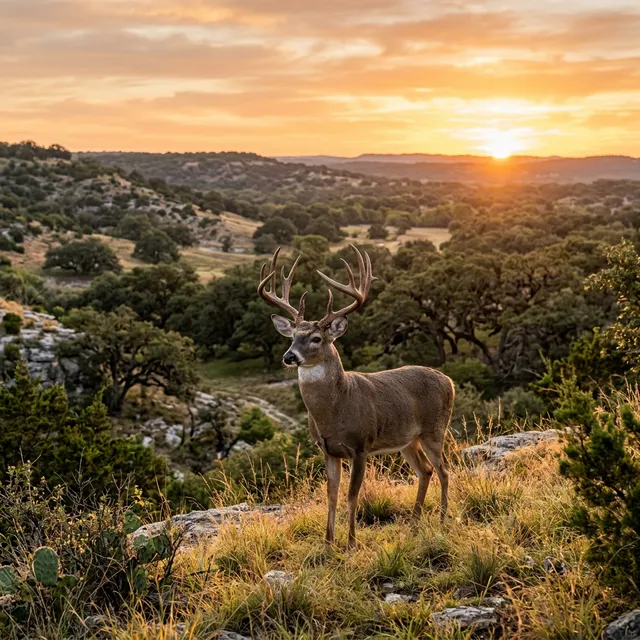
TL;DR — Key Takeaways
- Texas has more white-tailed deer than any other state — an estimated 5.4 million across 254 counties.
- The 2026-2027 general season runs Oct 31 – Jan 3 (North Zone) and Oct 31 – Jan 17 (South Zone), with archery opening Sep 26.
- Resident general hunting license costs $25; the Super Combo at $68 is the best value. Non-residents pay $315 for a general hunting license.
- Annual bag limit is 5 deer (max 3 bucks), but Managed Lands Deer Program (MLDP) properties may have different limits.
- County-level antler restrictions apply in many counties — check the Outdoor Annual before your hunt.
In This Guide 10 sections
- Why Texas Is America's #1 Deer Hunting State
- 2026-2027 White-Tailed Deer Season Dates
- License & Tag Requirements — What You Need
- County-Level Antler Restrictions — Understanding the System
- Best Regions for Deer in Texas
- Public Land Deer Hunting in Texas
- Managed Lands Deer Program (MLDP)
- Processing & Venison — From Field to Freezer in Texas Heat
- Non-Resident Deer Hunting in Texas
- Texas Deer Hunting FAQ
Why Texas Is America's #1 Deer Hunting State
Texas holds a unique position in American hunting — with an estimated 5.4 million white-tailed deer spread across 254 counties, the Lone Star State has the largest deer population in the country. More than 700,000 hunters pursue white-tailed deer in Texas each year according to TPWD harvest surveys, making it the single most popular big game species in the state.
Several factors make Texas exceptional for deer hunting:
- Massive land base — Texas has over 170 million acres of land, and roughly 97% is privately owned. Private land management has produced some of the nation's finest trophy deer habitat, especially in the South Texas Brush Country.
- Long seasons — The combined archery, general, and late seasons span from late September through early February, offering nearly five months of hunting.
- Generous bag limits — A 5-deer annual limit (max 3 bucks) is one of the most generous in the country.
- No draw system for deer — Unlike Western states with complicated draw lotteries, Texas deer tags come with your hunting license. Every licensed hunter can pursue deer.
- Diverse habitat — From the mesquite flats of South Texas to the oak forests of the Hill Country, the piney woods of East Texas, and the agricultural lands of the Rolling Plains, Texas offers drastically different hunting experiences across its regions.
Texas consistently produces Boone & Crockett record-book whitetails, particularly from the famous Golden Triangle of Webb, La Salle, and Dimmit counties in South Texas. In recent years, the state has also seen trophy-class bucks emerge from central Texas counties under intensive management.
2026-2027 White-Tailed Deer Season Dates
Texas divides its deer seasons by zone and weapon type. Here are the official dates set by TPWD for the 2026-2027 season:
| Season | Dates | Notes |
|---|---|---|
| Archery Only | Sep 26 – Oct 30, 2026 | Statewide |
| Youth-Only (Early) | Oct 24 – 26, 2026 | Statewide |
| General – North Zone | Nov 1, 2026 – Jan 4, 2026 | Any legal weapon |
| General – South Zone | Nov 1, 2026 – Jan 18, 2026 | Any legal weapon |
| Special Late – North Zone | Jan 5 – 18, 2026 | Antlerless & spike bucks only |
| Special Late – South Zone | Jan 18 – Jan 31, 2026 | Antlerless & spike bucks only |
| Muzzleloader | Jan 5 – 18, 2026 | 90 counties only |
| Youth-Only (Late) | Jan 5 – 18, 2026 | Statewide |
Important: During the Special Late Season, harvest is restricted to antlerless deer and bucks with unbranched antlers (spike bucks). This season is designed to manage the doe population and offer additional hunting opportunity after the main rut.
North Zone vs South Zone
The North Zone covers roughly the northern two-thirds of Texas, while the South Zone includes the southern third. The key difference is the South Zone's two additional weeks of general season hunting (through Jan 18 vs Jan 4), reflecting the later rut cycle in South Texas. Most South Texas deer don't enter peak rut until mid-to-late December, so the extended season gives hunters the opportunity to hunt during the most active breeding period.
License & Tag Requirements — What You Need
Resident Hunters
Texas residents need a valid hunting license to legally hunt deer. Here are the options:
| License Type | Cost | What It Covers |
|---|---|---|
| Resident General Hunting | $25 | All legal game animals and birds (base license) |
| Resident Super Combo | $68 | Hunting + fishing + all 5 endorsements — best value |
| Resident Youth (under 17) | $7 | Combo hunting and fishing |
| Resident Senior (65+) | $7 | Combo hunting and fishing |
The Super Combo ($68) includes your general hunting license, fishing license, and all five state endorsements (Archery, Freshwater Fishing, Saltwater Fishing, Upland Game Bird, and Migratory Game Bird). If you plan to do any other hunting beyond deer, this is the best deal.
Tags come with the license. In Texas, your deer tags are printed on your hunting license — you don't need to purchase separate deer tags. Each license includes tags for the annual bag limit of 5 deer (max 3 bucks), which you must fill out and attach to harvested animals.
Non-Resident Hunters
| License Type | Cost | What It Covers |
|---|---|---|
| Non-Resident General Hunting | $315 | Big game + small game (annual) |
| Non-Resident 5-Day Special Hunting | $48 | Small game only — no deer or turkey |
| Non-Resident Spring Turkey | $132 | Spring turkey only |
Non-residents pay $315 for a general hunting license that covers deer. There is no non-resident Super Combo. Non-resident deer tags are included with the $315 license.
Hunter Education Requirement
All hunters born on or after September 2, 1971 must complete a certified hunter education course. Texas accepts courses from all states through IHEA-USA reciprocity. Minimum age for Texas hunter education is 9 years old. Online courses are available through Hunter-Ed.com and TPWD-approved providers.
Landowner exception: Texas landowners and their immediate family members (by blood or marriage) can hunt on their own land without a hunting license. However, hunter education requirements still apply.
County-Level Antler Restrictions — Understanding the System
Texas uses a county-by-county antler restriction system to manage buck harvest quality. These restrictions were expanded significantly over the past decade and are designed to protect young bucks and improve age structure across the herd.
How the System Works
In counties with antler restrictions, a legal buck must have:
- At least one unbranched antler, OR
- An inside spread of 13 inches or greater (roughly ear-tip to ear-tip on an alert deer)
This means hunters may harvest ONE buck with unbranched antlers (a spike) as part of their 3-buck annual limit, but the remaining bucks must have an inside spread of 13+ inches.
Why It Matters
The 13-inch minimum spread effectively protects most 1.5 and 2.5-year-old bucks, allowing them to reach 3.5+ years when antler growth potential peaks. This system has been credited with significant improvements in buck quality across the state, particularly in the Post Oak Savannah and Cross Timbers ecoregions.
Always check the TPWD Outdoor Annual for your specific county's restrictions before hunting. The rules are updated annually and can be accessed through the free Outdoor Annual app, which works offline in the field.
Best Regions for Deer in Texas
Texas offers dramatically different deer hunting experiences depending on the region. Here's a breakdown of the state's top deer country:
South Texas Brush Country
The legendary deer region encompassing Webb, La Salle, Dimmit, Maverick, Duval, and McMullen counties. South Texas is where most Boone & Crockett record-book whitetails originate. The dense brush country, rich nutrition from native browse, and intensive private land management create ideal conditions for trophy-class bucks.
- Average buck age: 4.5-6.5 years on managed ranches
- Typical hunting method: Elevated blinds over senderos (cleared shooting lanes) and protein feeders
- Peak rut: Late December through mid-January
- Access: Almost entirely private ranches; guided hunts range from $3,000-$15,000+ for trophy-quality properties
Hill Country
Spanning from the Edwards Plateau through Llano, Mason, Gillespie, Kerr, and Kendall counties, the Hill Country has the highest deer density in the state — in fact, among the highest anywhere in the nation. The liveoak and juniper habitat supports enormous populations, though overcrowding can lead to smaller body and antler size without management.
- Deer density: 30-50+ deer per 1,000 acres in some areas
- Best for: High action, doe management hunts, and Axis deer (exotic species that are year-round and no-license-needed)
- Peak rut: Late October through mid-November
- Access: Mix of private ranches and some public land (Kerr WMA, Mason Mountain WMA)
Piney Woods (East Texas)
The forested region of northeast Texas (Angelina, Nacogdoches, Cherokee, Jasper counties) offers a different experience — hunting big hardwood bottoms and pine plantations. The deer population is lower but bucks can grow impressive antlers thanks to excellent soils and food sources.
- National Forest access: Sam Houston, Davy Crockett, Angelina, and Sabine National Forests offer free public deer hunting
- Typical methods: Still-hunting, rattling during rut, food plots
- Peak rut: Early to mid-November
Rolling Plains
The Rolling Plains of West-Central Texas (Shackelford, Throckmorton, Young, Haskell counties) offer relatively lower hunting pressure and a growing reputation for quality bucks on agricultural lands with CRP (Conservation Reserve Program) cover.
- Best for: DIY hunters seeking open-country hunting
- Population: Moderate density, but good management practices are showing results
- Peak rut: Mid-to-late November
Public Land Deer Hunting in Texas
With 97% of Texas land in private hands, public land hunting is competitive but absolutely possible. Here are your best options:
State Wildlife Management Areas (WMAs)
TPWD manages more than 50 WMAs across the state, totaling over 750,000 acres. Most WMAs offer deer hunting through the Annual Public Hunting (APH) permit, which costs $48 per year. Some high-demand WMAs require additional drawn hunt permits through the TPWD online draw system.
Top WMAs for deer:
- Kerr WMA (Hill Country) — Excellent whitetail and free-range Axis deer
- Black Gap WMA (Trans-Pecos) — Remote mule deer hunting
- Gene Howe WMA (Panhandle) — Underrated whitetail opportunity
- Chaparral WMA (South Texas) — High-quality South Texas genetics
National Forests
Texas has four national forests totaling 637,000+ acres in East Texas, all open to public deer hunting:
- Sam Houston National Forest (163,000 acres)
- Davy Crockett National Forest (161,000 acres)
- Angelina National Forest (153,000 acres)
- Sabine National Forest (161,000 acres)
Hunting on national forests is free with a valid Texas hunting license — no additional permit required. These forests are particularly good for bow hunting during the early archery season when pressure is low.
Army Corps of Engineers (USACE) Lands
Several USACE lake properties in Texas allow public hunting. Popular options include the Somerville WMA, Lake Texoma, and Lake Sam Rayburn areas. Regulations vary by property.
Managed Lands Deer Program (MLDP)
The Managed Lands Deer Program (MLDP) is TPWD's cooperative wildlife management program that gives enrolled landowners greater flexibility in deer harvest. Previously known as the "MLD Permit" program, it's one of the most sophisticated private-land wildlife management tools in the country.
How It Works
- Enrollment: Landowners apply to TPWD with a wildlife management plan for their property
- Biologist assessment: A TPWD biologist evaluates the property, determines carrying capacity and herd composition
- Custom harvest recommendations: Instead of standard bag limits, MLDP properties receive property-specific harvest quotas
- Extended seasons: MLDP properties may have extended seasons, including antlerless-only and either-sex hunting windows outside regular dates
- Tags: Special MLDP tags replace standard tags for enrolled properties
Benefits to Hunters
If you're hunting on an MLDP-enrolled ranch, you benefit from professionally managed deer populations with balanced age and sex ratios. Many premium guided hunts in Texas operate under MLDP, which is why they can offer trophy-class deer with high success rates.
Processing & Venison — From Field to Freezer in Texas Heat
Texas heat presents unique challenges for game care:
Immediate Field Dressing
In Texas's warm climate, it is critical to field dress immediately after harvest. Internal temperatures remain high even during November hunts, especially in South Texas where daytime highs can reach 80°F+ during deer season.
Cooling & Transport
- Keep a large cooler with ice in your vehicle for immediate cooling
- Consider a skinning and quartering station if hunting remote areas
- Many processing facilities require same-day delivery or evidence that the carcass was kept cool
- If transporting to a processor, call ahead to confirm drop-off times and hours
Texas Processors
Texas has hundreds of deer processing facilities, typically charging $75-$150 for basic processing (skinning, cutting, wrapping) and $150-$300 for sausage/specialty products. During peak season (opening week of general firearms), expect wait times.
Non-Resident Deer Hunting in Texas
Why Non-Residents Choose Texas
Texas offers several advantages for out-of-state deer hunters:
- No draw system — Buy your license, show up, and hunt
- Long seasons — Nearly 5 months of combined opportunity
- Guaranteed opportunity — No tag quotas or point systems
- Exotic species bonus — Many ranches offer Axis deer, blackbuck, and nilgai with no season or bag limits
Budget Planning
| Expense | Estimated Cost |
|---|---|
| Non-Resident General Hunting License | $315 |
| Guided ranch hunt (3-day, moderate quality) | $2,000-$5,000 |
| DIY public land hunt (self-guided) | $500-$1,000 (gas, food, lodging) |
| Meat processing | $75-$150 |
| Taxidermy (shoulder mount) | $500-$800 |
| Total range | $890-$6,265+ |
Trip Planning Tips
- Best timing for trophy hunting: Late December through mid-January (South Texas rut)
- Best timing for action: Opening week of general season (Nov 1+)
- Airports: San Antonio (SAT) for Hill Country/South Texas, Houston (IAH/HOU) for East Texas, Dallas (DFW) for North Texas
- Lodging: Ranch hunts typically include lodging and meals; DIY hunters can find rural cabins and campgrounds near WMAs
Texas Deer Hunting FAQ
What is the bag limit for white-tailed deer in Texas?
The annual bag limit is 5 deer, with no more than 3 being bucks. This limit applies statewide unless you're hunting on a Managed Lands Deer Program (MLDP) property, which may have custom harvest quotas set by TPWD biologists.
Do I need a separate deer tag in Texas?
No. Deer tags are included on your Texas hunting license. You receive tags for your full annual bag limit when you purchase any valid hunting license. Simply fill out the tag information and attach it to the deer immediately after harvest.
Can I bait deer in Texas?
Yes — Texas is one of the few states where baiting deer is legal statewide. Corn feeders, protein feeders, and food plots are widely used across the state. However, there are restrictions in some CWD surveillance zones, so check the current Outdoor Annual for your hunting county.
When is the rut in Texas?
The rut timing varies significantly across Texas. In the Hill Country and North Zone, peak rut typically occurs from late October through mid-November. In South Texas, the rut is much later, peaking from late December through mid-January. Eastern Texas falls somewhere in between, with most rutting activity in early-to-mid November.
Is there CWD in Texas deer?
Yes. Chronic Wasting Disease (CWD) has been detected in free-ranging deer in several Texas counties, primarily in the Trans-Pecos region and parts of the Panhandle. TPWD operates CWD surveillance zones with special regulations including carcass transport restrictions and mandatory check stations. Always check the TPWD CWD map before your hunt.
Can I hunt deer on Texas public land?
Yes. While 97% of Texas is private, the state offers public deer hunting on WMAs (with an APH permit for $48), national forests (free with a hunting license), and Army Corps of Engineers lands. Competition can be stiff on opening weekend, so consider mid-week hunts and archery season for lower pressure.
What weapon restrictions apply during archery season?
During the archery-only season (Sep 26 – Oct 30), only archery equipment is legal. This includes compound bows, recurve bows, longbows, and crossbows. Arrows must be equipped with broadheads with at least two cutting edges. Crossbows are legal during archery season in Texas without requiring a special permit.
Do Texas landowners need a hunting license?
Texas landowners and their immediate family members (spouse, parents, children, siblings, and grandchildren by blood or marriage) are exempt from the hunting license requirement when hunting on their own property. However, they still must comply with all other game laws including seasons, bag limits, and hunter education requirements (if born on or after September 2, 1971).
- Hunting on Public Land — Access, Rules & Permits You Need to Know Complete guide to hunting on public land in the US. Learn about federal and stat…
- Non-Resident Hunting — Tips & Cost-Saving Strategies for Out-of-State Hunts Planning a hunt in another state? Learn how to save on non-resident hunting lice…
- First-Time Hunter Checklist — Everything You Need Before Your First Hunt Complete first-time hunter checklist covering gear, safety, licensing, and prepa…
Recommended Resources
Affiliate links — we may earn a commission at no extra cost to you. Learn more
Frequently Asked Questions
What is the bag limit for white-tailed deer in Texas?
The annual bag limit is 5 deer, with no more than 3 being bucks. This limit applies statewide unless you're hunting on a Managed Lands Deer Program (MLDP) property, which may have custom harvest quotas.
Do I need a separate deer tag in Texas?
No. Deer tags are included on your Texas hunting license. You receive tags for your full annual bag limit when you purchase any valid hunting license.
Can I bait deer in Texas?
Yes — Texas is one of the few states where baiting deer is legal statewide. Corn feeders and protein feeders are widely used. Check for restrictions in CWD surveillance zones.
When is the rut in Texas?
Rut timing varies: Hill Country and North Zone peak in late October through mid-November. South Texas peaks much later, from late December through mid-January.
Can I hunt deer on Texas public land?
Yes. Texas offers public deer hunting on state WMAs (with a $48 APH permit), national forests (free with license), and Army Corps lands. Consider mid-week or archery season for lower pressure.
Do Texas landowners need a hunting license?
Texas landowners and immediate family members are exempt from the hunting license requirement on their own property, but must still follow all game laws including seasons and bag limits.
What is the CWD situation in Texas?
CWD has been detected in free-ranging deer in several counties, primarily in the Trans-Pecos region and Panhandle. TPWD operates surveillance zones with special regulations including carcass transport restrictions.
What weapon can I use during archery season in Texas?
During archery-only season (Sep 26 – Oct 30), compound bows, recurve bows, longbows, and crossbows are all legal. Arrows must have broadheads with at least two cutting edges. No special crossbow permit is required.
View Page Update History (2)
- 2026-04-01:Updated for the 2026-2027 season with current bag limits and antler restrictions.
- 2025-08-15:Added section on CWD surveillance zones and carcass transport rules.