
Wisconsin Bear Hunting 2026: Preference Points, Wait Times, Zones & Methods
Master Wisconsin's bear preference point system, understand zone-by-zone wait times, and plan your once-in-a-decade bear hunt in the Northwoods.
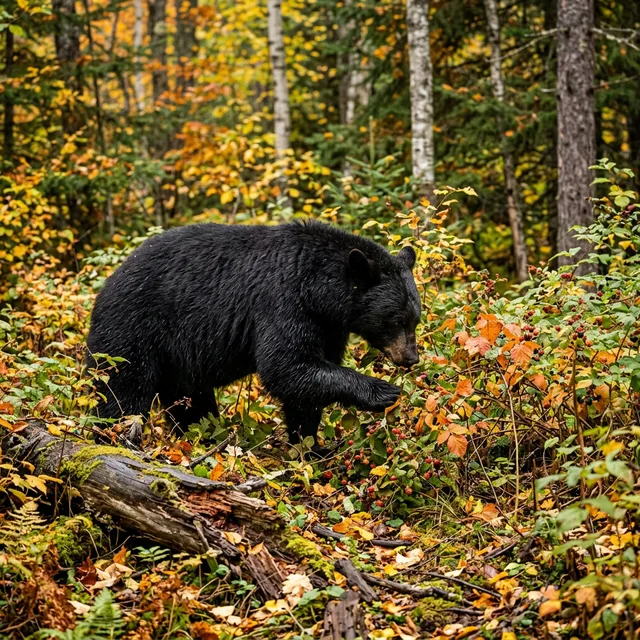
TL;DR — Key Takeaways
- Wisconsin has one of the largest black bear populations east of the Mississippi — estimated at 24,000+ animals concentrated in the northern and central forests.
- Bear hunting requires a harvest authorization obtained through a preference point drawing — wait times range from 4 years in southern zones to 12+ years in popular northern zones.
- A record 146,000+ people applied for bear permits or purchased preference points in 2025, making the drawing increasingly competitive.
- Wisconsin is divided into 6 Bear Management Zones (A–F). Dogs are permitted in Zones A, B, and D only — southern zones (C, E, F) are bait-only.
- The 2026 bear season runs September 9 – October 13 with method-specific periods within each zone.
- Preference points expire if you fail to apply for 3 consecutive years. Points reset to zero once drawn, regardless of whether you purchase the license.
In This Guide 8 sections
- Why Wisconsin Is a Premier Bear Hunting Destination
- The Preference Point System — Your Multi-Year Investment
- 2026 Bear Season Dates & Method Periods
- Hunting Methods — Baiting, Hounds & Spot-and-Stalk
- License Costs & Requirements
- Non-Resident Bear Hunting Strategy
- Best Areas by Zone
- Wisconsin Bear Hunting FAQ
Why Wisconsin Is a Premier Bear Hunting Destination
Wisconsin ranks among the top black bear hunting states in the eastern United States, with a healthy and growing population estimated at over 24,000 bears. The state's vast northern forests — blanketed with mixed hardwoods, conifers, and abundant berry-producing understory — provide ideal bear habitat stretching from the Minnesota border to the Upper Michigan line.
What makes Wisconsin bear hunting truly distinctive is the preference point system that creates a years-long investment for every hunter who draws a tag. Unlike western states where you might buy an over-the-counter bear tag, a Wisconsin bear permit is a hard-won prize that many hunters wait a decade or more to receive. This scarcity creates an almost reverential approach to the hunt — when your number finally comes up, the pressure to make it count is intense.
The state also offers uniquely diverse hunting methods. Wisconsin is one of only a handful of states that still allows hunting with hounds — a tradition deeply rooted in Northwoods culture — alongside baiting with donuts, trail mix, granola, and other attractants. This combination of methods, combined with the long wait for a tag, makes a Wisconsin bear hunt a bucket-list experience.
The Preference Point System — Your Multi-Year Investment
Wisconsin's bear harvest authorization is obtained through an annual drawing that uses preference points to determine priority. Understanding this system is critical for planning your bear hunt years in advance.
How It Works
- Annual Application — Apply by the December 10 deadline each year for either a harvest authorization (tag) or preference points only.
- Point Accumulation — If you are not drawn, you earn one preference point for that year. Points accumulate over time.
- Drawing Priority — Applicants with the most preference points are drawn first within each zone. Among applicants with equal points, selection is random.
- Zone Selection — You choose your desired Bear Management Zone when applying. Points are NOT zone-specific — you can apply for a different zone each year without losing points.
- Point Reset — Once drawn for a harvest authorization, all your points reset to zero, whether or not you purchase the license or hunt.
- Use-It-or-Lose-It — You must apply at least once every 3 consecutive years or all accumulated points are forfeited.
Application Timeline for 2026 Season
| Milestone | Date |
|---|---|
| Application deadline (harvest auth or points) | December 10, 2025 |
| Drawing results available online | Mid-February 2026 |
| Successful applicants may purchase Class A Bear License | March 2026 |
| 2026 bear season opens | September 9, 2026 |
| 2026 bear season closes | October 13, 2026 |
Wait Times by Zone
Wait times vary dramatically by zone. The most popular northern zones can require over a decade of point-building, while newer southern zones may be accessible in as few as 4 years.
| Zone | Location | Approx. Wait (Years) | Dogs Allowed | Notes |
|---|---|---|---|---|
| A | Northwest (Ashland, Bayfield, Douglas) | 8–12+ | Yes | Highest bear density; most popular |
| B | Northeast (Oneida, Vilas, Forest, Florence) | 10–12+ | Yes | Excellent habitat; heavy demand |
| C | West-Central (Clark, Chippewa, Eau Claire) | 6–8 | No | Mix of forest and farmland |
| D | North-Central (Lincoln, Langlade, Marathon) | 7–10 | Yes | Transition zone; good populations |
| E | Southwest (La Crosse, Vernon, Crawford) | 4–6 | No | Expanding bear range; newer zone |
| F | Southeast (Sauk, Columbia, Dodge) | 4–5 | No | Newest zone; bears expanding south |
Record demand: Over 146,000 people applied for a license or purchased a preference point for the 2025 season — a new all-time record. This growing demand means wait times are generally increasing, not decreasing.
SVG: Wisconsin Bear Management Zones
2026 Bear Season Dates & Method Periods
Wisconsin's bear season runs from September 9 through October 13, 2026, but the specific methods allowed vary by zone and week. This staggered approach manages hunter pressure and gives different method types their own windows.
| Period | Zones A, B, D (Dogs Permitted) | Zones C, E, F (No Dogs) |
|---|---|---|
| Sep 9–15 | Bait + all methods (no dogs) | Bait + all methods (no dogs) |
| Sep 16 – Oct 6 | Dogs, bait + all methods | Bait + all methods (no dogs) |
| Oct 7–13 | Dogs only (no other methods) | Bait + all methods (no dogs) |
Understanding the Method Windows
- Bait period (Sep 9–15 in dog zones): All hunters start with bait and spot-and-stalk methods. Dogs are not yet allowed, giving bait hunters an exclusive window.
- Open period (Sep 16 – Oct 6 in dog zones): The most popular window. All methods — dogs, bait, spot-and-stalk — are legal simultaneously. This creates a dynamic, exciting hunting environment.
- Dogs-only period (Oct 7–13 in dog zones): The final week is reserved exclusively for hound hunters in Zones A, B, and D. Bait sites must be removed.
- Southern zones (C, E, F): Dogs are never permitted. Bait and other non-dog methods are legal throughout the entire September 9 – October 13 season.
Hunting Methods — Baiting, Hounds & Spot-and-Stalk
Baiting
Baiting is the most common bear hunting method in Wisconsin and is legal in all six zones. Hunters establish bait stations weeks before the season opener to pattern bears using trail cameras.
Common baits: Trail mix, granola, donuts, pastries, chocolate, dog food mixed with grease or molasses, and fruit. Many hunters develop proprietary "honey burn" mixtures.
Regulations:
- Bait stations must be registered with the DNR at least 2 weeks before the season.
- Only natural or processed food is permitted — no animal carcasses or parts.
- Bait stations must be at least 100 yards from any road, trail, campsite, or occupied dwelling.
- You may not place more bait than a bear can consume in a 24-hour period.
Hunting with Hounds
Wisconsin is one of approximately 7 states that still allows bear hunting with trained hounds. This tradition is deeply rooted in Wisconsin's Northwoods culture and involves packs of hound dogs (typically Plotts, Walkers, and Black and Tans) tracking and treeing bears.
Key rules for hound hunting:
- Permitted in Zones A, B, and D only.
- Dog training season (no firearms, catch-and-release) runs from July through August.
- Dogs must wear GPS tracking collars.
- Maximum of 6 dogs per group pursuing a single bear.
- Hound hunters often work in groups and share dogs and responsibilities.
Spot-and-Stalk
While less common than baiting, spot-and-stalk hunting is legal during all open periods. This method works best in areas with concentrated food sources: berry patches, oak flats dropping acorns, or agricultural fields (especially corn and oat fields near forest edges).
License Costs & Requirements
| Item | Resident | Non-Resident |
|---|---|---|
| Class A Bear License (after drawing) | $49 | $251 |
| Preference Point Purchase (no harvest auth) | $3 | $3 |
| Application Fee | Included | Included |
| Habitat Stamp (required add-on) | $7 | $7 |
| Total cost for drawn hunter | $56 | $258 |
Important notes:
- Both residents and non-residents participate in the same drawing pool — there is no separate resident/non-resident allocation.
- You must purchase the Class A Bear License after being drawn — simply being drawn does not automatically charge you. However, your preference points reset to zero regardless.
- A valid Wisconsin small game license is required in addition to the bear license.
Non-Resident Bear Hunting Strategy
Non-residents face the same wait times as residents, making strategic planning essential:
- Start building points early — Even if you're not ready to hunt for years, purchase preference points ($3/year) beginning now to build your position.
- Consider southern zones — Zones E and F have shorter wait times (4–5 years) and are where the bear population is actively expanding.
- Don't miss applications — Remember the 3-consecutive-year rule. Miss three straight years and you lose all points.
- Plan for bait hunting — Since dogs are not allowed in the shorter-wait zones (C, E, F), master baiting techniques and securing good bait site locations.
- Book public land early — Contact the DNR's public lands office for information on county forests and state properties available for bear hunting in your target zone.
Best Areas by Zone
Zone A (Northwest) — The Bear Capital
Counties like Ashland, Bayfield, and Douglas have the highest bear density in the state. The Chequamegon-Nicolet National Forest provides over 1.5 million acres of prime bear habitat with abundant food sources and remote terrain. Douglas County Forest (278,000 acres) offers vast, lightly-hunted tracts.
Zone B (Northeast) — Deep Woods Quality
Vilas, Oneida, Forest, and Florence counties feature extensive mixed forests with excellent berry production. The Nicolet side of the national forest and large county forests provide ample public access.
Zone D (North-Central) — Transition Opportunities
Lincoln, Langlade, and Marathon counties offer a transition between deep forest and agricultural edges. Bears here are often larger-bodied due to access to crop fields and orchards.
Zones E & F (Southern) — The New Frontier
Bear populations are expanding south into La Crosse, Vernon, Crawford, Sauk, and Columbia counties. While bear density is lower, these zones offer shorter wait times and growing opportunities as the population expands.
Wisconsin Bear Hunting FAQ
- Wisconsin Deer Hunting 2026: Gun Season, CWD Zones, Antlerless Tags & County Rules The definitive guide to deer hunting in Wisconsin — covering the legendary gun s…
- Wisconsin Turkey & Waterfowl Hunting 2026: Seasons, Zones, Stamps & Top Public Lands Complete guide to turkey and waterfowl hunting in Wisconsin — spring and fall tu…
- Hunting on Public Land — Access, Rules & Permits You Need to Know Complete guide to hunting on public land in the US. Learn about federal and stat…
Recommended Resources
Affiliate links — we may earn a commission at no extra cost to you. Learn more
Bear Baiting Supplies
Bear hunting gear including attractants, trail cameras for bait stations, and hunting clothing for early fall conditions.
Bass ProTrail Cameras for Bear
Cellular and standard trail cameras for monitoring bear bait stations. Essential for patterning bears before the season.
Cabela'sWisconsin Hunter Education
State-approved online hunter education course for Wisconsin. Required for first-time license buyers.
Hunter-Ed.comFrequently Asked Questions
How long does it take to draw a Wisconsin bear tag?
Wait times vary by zone: 4–5 years in southern zones (E and F), 6–8 years in central zones (C and D), and 10–12+ years in popular northern zones (A and B). Over 146,000 people applied in 2025, making wait times increasingly competitive.
When is the application deadline for Wisconsin bear hunting?
The application deadline for bear harvest authorizations or preference points is December 10 each year. Drawing results are available in mid-February, and successful applicants can purchase their Class A Bear License starting in March.
Can you use dogs to hunt bears in Wisconsin?
Yes, but only in Zones A, B, and D (northern Wisconsin). Dogs are not permitted in Zones C, E, or F. Within dog zones, hound hunting is allowed during specific periods: September 16 – October 6 (all methods including dogs) and October 7–13 (dogs only).
Do preference points expire in Wisconsin?
Yes. If you fail to apply for either a harvest authorization or preference points for 3 consecutive years, all accumulated points are forfeited. Points also reset to zero when you are successfully drawn, regardless of whether you purchase the license.
How much does a Wisconsin bear hunting license cost?
After being drawn, the Class A Bear License costs $49 for residents and $251 for non-residents, plus a $7 habitat stamp. Preference point purchases (without applying for a harvest authorization) cost just $3 per year for both residents and non-residents.
What is the best zone for a first-time Wisconsin bear hunter?
For shorter wait times, Zones E (Southwest) and F (Southeast) typically require only 4–5 years of preference points. For the highest bear density and best odds of success, Zone A (Northwest) is the gold standard — but expect 10–12+ years of waiting. Zone C offers a middle ground with 6–8 year waits.
Can non-residents hunt bears in Wisconsin?
Yes. Residents and non-residents compete in the same drawing pool with no separate allocation. Non-residents pay $251 for the Class A Bear License (vs $49 resident) and $3 per year for preference points. Non-residents are equally eligible and can build points across multiple years.
When is the 2026 Wisconsin bear hunting season?
The 2026 Wisconsin bear season runs from September 9 through October 13. In Zones A, B, and D: September 9–15 is bait-only, September 16 – October 6 allows all methods including dogs, and October 7–13 is dogs-only. In Zones C, E, and F: bait and non-dog methods are legal throughout.